
Our readers keep the lights on and the weekend projects moving. As an Amazon Associate, I earn from qualifying purchases.
Specs are compiled from manufacturer listings and verified buyer reviews and can change over time — please confirm the key details on the product page before buying.
The right baseball mitt for a growing kid or a casual weekend game should not cost a lot, but it also should not fall apart after one season. The hardest part is finding a glove that fits, closes easily, and actually catches a ball — without needing hours of painful break-in (the time you spend softening stiff leather to form a pocket).
I’m Rikta — the founder and writer behind FitlyFast. This guide is built by comparing the manufacturers’ published specifications and the patterns across verified customer reviews, so you get each pick’s real strengths and trade-offs instead of marketing spin.
This roundup of the best budget baseball glove options focuses on what actually matters — fit, durability, and how fast you can play catch with it.
Our Picks at a Glance

How To Choose The Best Budget Baseball Glove
The best glove for your budget fits the player’s age, skill level, and position without needing expensive leather conditioner and days of work to get it game-ready. Here are the few things that really separate a good value from a frustrating one.
Fit the Age, Not the Price Tag
A 10-inch (about 25.4 cm) glove that fits a five-year-old perfectly will be too big for a 10-year-old. Manufacturers design these gloves in specific size ranges for a reason. For tee-ball and coach pitch (ages 4-7), look for sizes between 9 and 11 inches. For youth league (ages 8-12), an 11.5 to 12-inch glove is the balance. Adult recreational players can go from 12.5 to 13 inches.
Break-In Level Is the Hidden Cost
A stiff glove that needs ten hours of pounding and oil to form a pocket (the leather cradle that holds the ball) is frustrating, especially for a young kid. According to buyer reviews, “ready-to-play” or “soft break-in” gloves win on satisfaction because a child can squeeze them closed on day one. A glove that is 80 to 90 percent broken in (softened) from the factory is worth paying a few extra dollars for — you are buying time and keeping a child interested.
Web Style Tells You Where to Play
A basket web (a closed web with no gaps) or H-web (a web with a vertical opening) is generally good for infield work because you can see the ball through the web. A modified trap-eze or trapeze web (a deeper, wider web) is better for outfielders who need a deep pocket to catch fly balls. If you are buying for a kid who has not settled into one position yet, a basket web is the safest, most versatile choice.
Leather vs. Synthetic at This Price
Full-grain or top-grain leather (the highest-quality cut of animal hide) is far more durable than synthetic leather (man-made material), but it costs more. In the budget zone, many gloves use a leather shell (a real leather outer layer) with a synthetic or mesh backing to save weight and cost. A glove with a quality pigskin (light, soft leather from a pig) or cowhide (heavier, stiffer leather from a cow) palm and a synthetic back can be lighter and still last a season or two.
Quick Comparison
| Model | Best For | Size | Material | Break-In Level | Amazon |
|---|---|---|---|---|---|
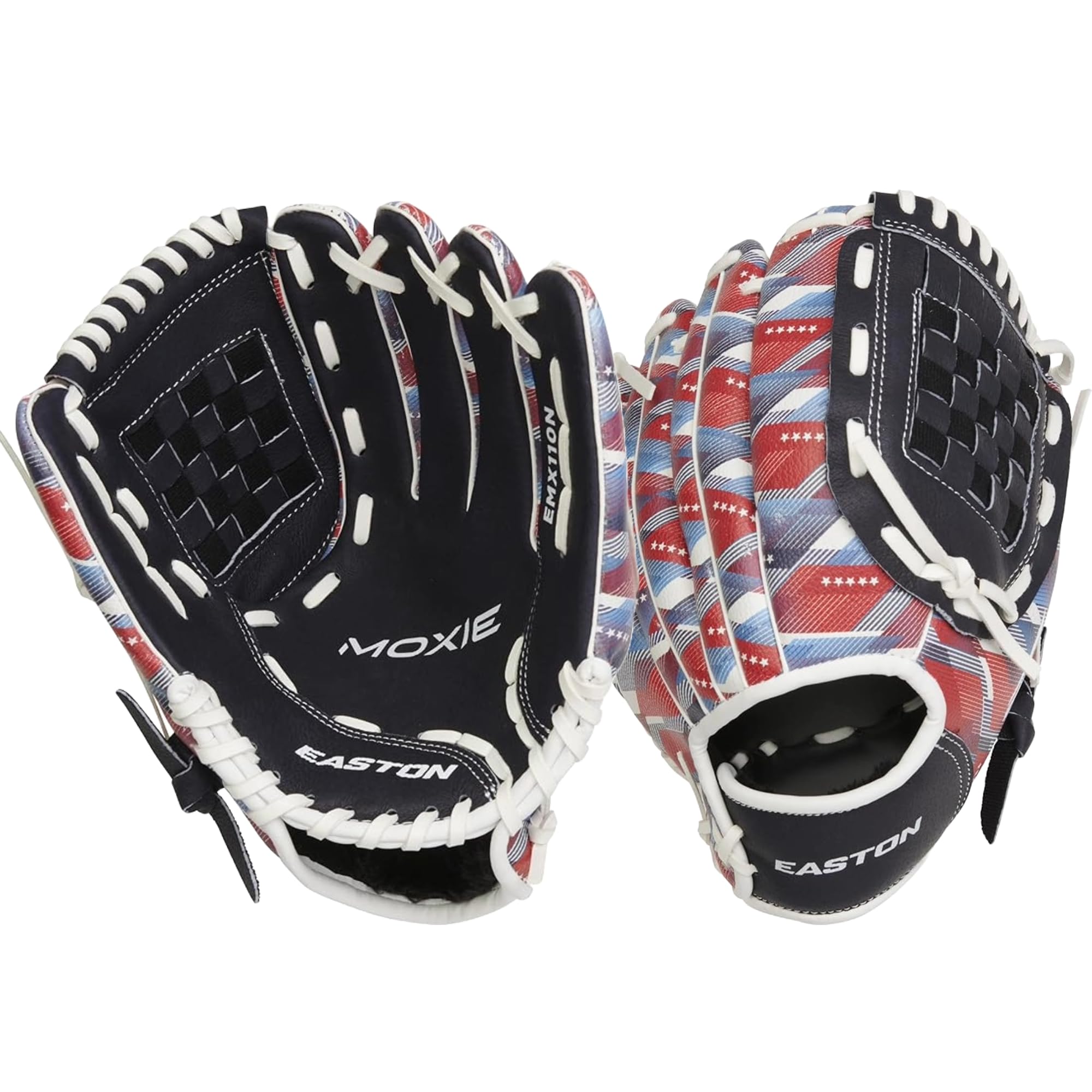
| Easton Moxie Youth★ Best Overall | First-time youth (Ages 5-7) | 11″ | Leather Shell | Ready-to-Play | Amazon |
| Wilson 2023 A500Top Performer | Youth utility (Ages 8-10) | 12.5″ | Top Grain Leather | Soft | Amazon |
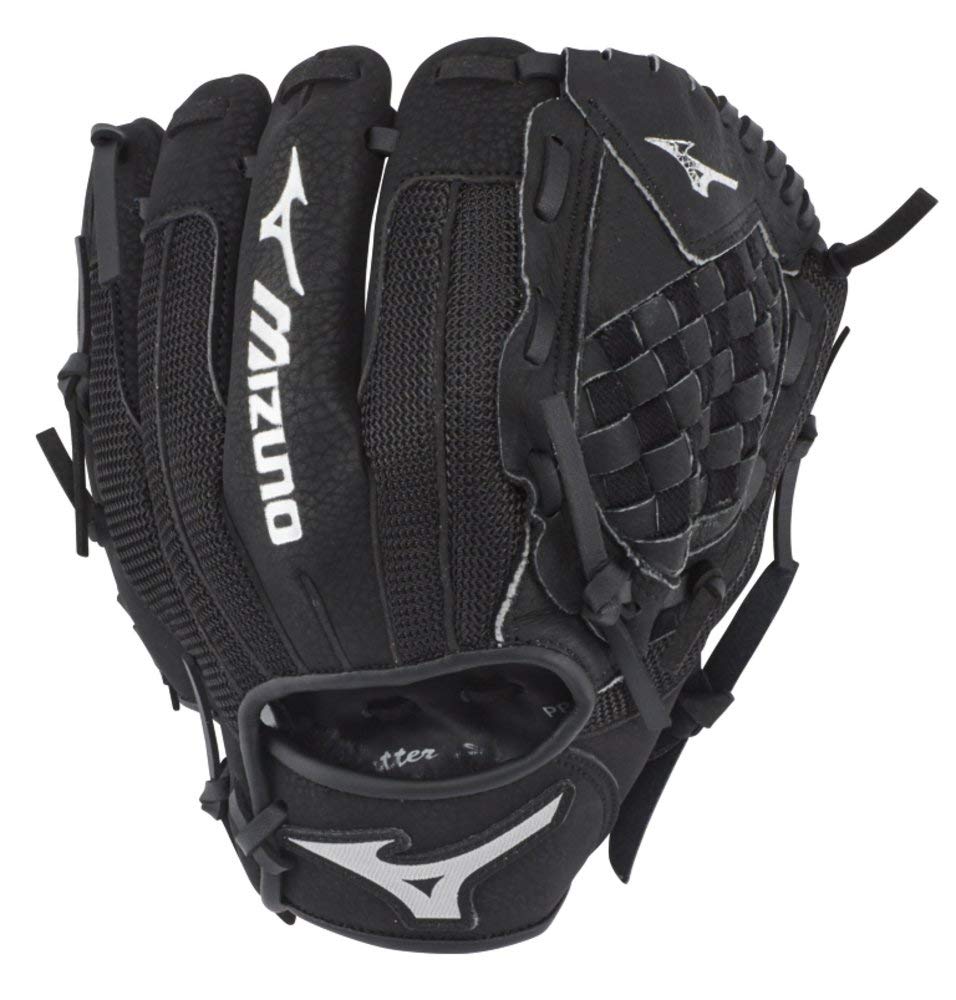
| Mizuno Prospect PowerCloseBest Leather | All-leather quality for youth | 10.5″ | Full Grain Pigskin Leather | Ready-to-Play | Amazon |
| Franklin Sports RTP Pro | Adult / backup glove | 12.5″ | Pigskin Leather | Ready-to-Play | Amazon |
| Marucci Swift SWFT125 | Growing youth (Ages 10-14) | 12.5″ | Leather / Faux Leather Mix | Soft | Amazon |
| Wilson A700 | Adult outfield / large hands | 12.5″ | Full Grain Leather | Soft | Amazon |
| Rawlings Renegade | Recreational adult play | 12.5″ | Leather Shell / Pro Mesh Back | 90% Factory / 10% Player | Amazon |
| Rawlings Sandlot | Player needing durability | 11.75″ | Full-Grain Oiled Shell Leather | 80% Factory | Amazon |
| Franklin Sports CTZ5000 | High school / serious play | 12.5″ | Full-Grain Cowhide Leather | Soft | Amazon |
In‑Depth Reviews
1. Easton Moxie Youth Baseball Glove
This glove fits a five-year-old’s hand from day one, no pounding required.
You get a glove that your young player can actually close and catch with on the first toss. The Easton Moxie uses an all-leather shell (a real leather outer layer) that is soft and flexible right out of the package. The 11-inch (about 28 cm) basket web (a closed web with no gaps) makes it a solid all-position starter. It also has Zero Shock sting reduction technology (a layer of padding that softens the impact of a caught ball), which builds confidence in a first-timer. Buyers report that a 6-year-old in coach pitch softball had it fit “perfect” from the start.
The quality is the top praise among owners — dozens note that the materials hold up through a full season. The fit runs true for a 5, 6, or 7-year-old. The only mixed note is on long-term durability, which is normal for any youth glove in this price range; some families say it lasts through a second child, others see wear after a heavy season. At this price, the balance of ready-to-play softness and real leather is tough to top.
The Moxie USA color options are a hit with kids, and parents like that the whole matching collection is available. If you need a glove that lets a young player catch from the very first toss, this is the one.
Youth-friendly fit
- All-leather shell is game-ready and soft from day one
- Zero Shock protection reduces palm sting
- Widely praised for quality and fit by parents
Break-in needed
- Long-term durability is mixed with heavy use
- Limited to youth sizing (10.5″ to 11″)
Young players: you need a ready-to-play glove for a 5-to-7-year-old starting tee-ball or coach pitch.
Advanced play: you need a larger size or expect a glove to survive through two seasons of intense league play.
2. Wilson 2023 A500 Youth Baseball Glove
A real leather glove that an 8 and 10-year-old can both love, right out of the bag.
You get top grain leather (the tough, high-quality outer layer of the hide) here, not a cheaper synthetic blend. The Wilson A500 uses rolled dual welting (reinforced stitching inside the glove) to help it hold its shape longer. The 12.5-inch (about 32 cm) utility size and open single post web (a web with one vertical post) make it versatile for infield and outfield. Owners mention that their 8 and 10-year-old sons use it comfortably, and a 6-year-old in a smaller version got along with it after a couple days of catch.
Quality is the highest praise, mentioned over 60 times by owners. The ease of break-in is the second standout — many report it needs almost zero time to soften (flex and form a pocket). The Quick Fit Wrist elastic system (an adjustable strap that hugs the wrist) gives a snug fit on different hand sizes. The main trade-off is the laces: the knots at the end can come loose with regular use. Owners suggest checking them weekly and pulling them tight — a simple fix for an otherwise well-made glove.
Compared to the stiffer Rawlings Sandlot, the A500 is much softer from the start, making it a strong pick for younger players moving up from tee-ball.
Durable synthetic
- Top grain leather is durable and lightweight
- Almost zero break-in time required
- Rolled dual welting helps it hold shape
Stiff palm
- Lacing knots can come loose and need periodic tightening
- 12.5″ may be too large for very young players
Budget buy: a youth player ages 8-10 who needs a real leather glove that is easy to close and versatile across positions.
Game ready: a child who is still in tee-ball and needs a smaller size.
3. Mizuno Prospect PowerClose Youth Baseball Glove
Full-grain pigskin leather at a price that undercuts most all-leather competitors.
Mizuno gives you a serious material advantage here. The shell is full-grain pigskin leather (a tougher, more durable leather than cowhide at this weight), and the palm liner uses a butter-soft PU (polyurethane) layer that feels comfortable against the hand. The “Less 2 Lacing” design (which removes the last two lace loops on the web) makes the glove more flexible along the closing axis, helping a young hand squeeze it shut. Customers note that their 6 and 7-year-old players saw immediate improvement, going from struggling to catching most balls after a short break-in.
Quality is the top positive aspect, with owners praising the all-leather construction. The suitability for beginners is the second-most discussed strength — it fits well for tee-ball and coach pitch. The glove does arrive stiffer than some “ready-to-play” labels suggest; a few buyers mention needing an hour or two of break-in to form the hinge, rather than zero time. But durability is a standout — one owner notes it looks “still new” after 1.5 seasons of regular practice and games. The air mesh back (a breathable fabric panel) keeps the glove from feeling too heavy on a young hand.
This glove is the best all-leather value in the list, beating most alternatives on material quality per dollar. If you want a glove that will survive multiple seasons and help a young player catch better, this is the pick.
PowerClose tech: parents who want real leather that lasts multiple seasons without spending above.
4. Franklin Sports RTP Pro Baseball Glove
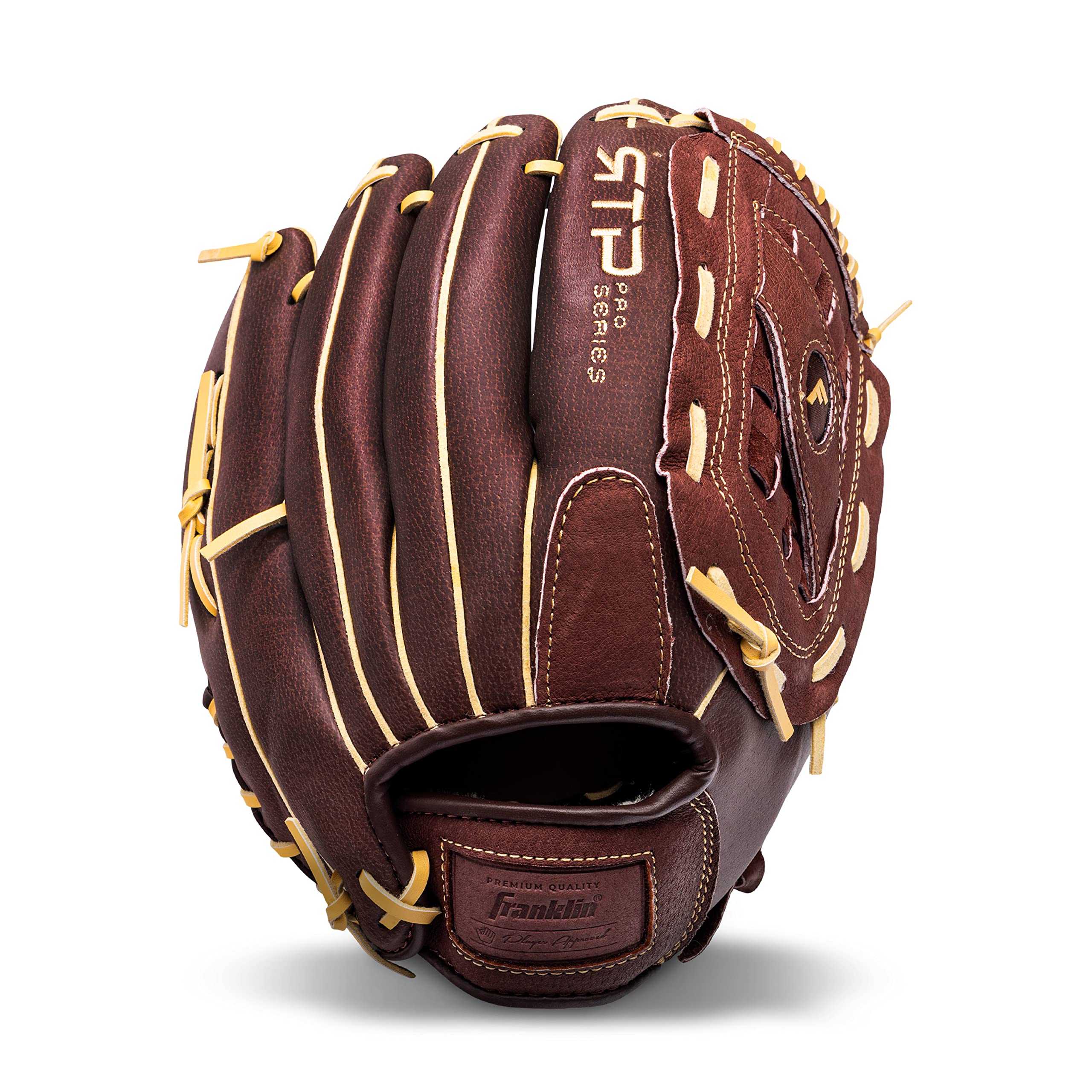
A genuine pigskin leather glove for adults that needs barely any break-in.
This Franklin RTP Pro fills a specific gap: a budget-friendly adult glove that does not feel like plastic. At 12.5 inches (about 32 cm), it is a true adult size, and the pigskin leather shell (a real leather outer layer from a pig) is lightweight and flexible enough for catch on day one. The basket web with a horizontal stripe (a closed web with a reinforcing bar) is a good all-purpose design for fielding grounders and catching fly balls. Reviewers point out it fits a dad’s hand well for playing with a grandson and has held up for nearly a year with no issues.
Quality is praised most often here — over 55 owners call it out. Value for money is the second top note, with several buyers saying it performs like a glove costing twice as much. The shell includes a durable coating to protect against dirt and moisture. The main caveat is sizing: several shoppers say it runs a bit small. An adult with very large hands may find it snug, and teens or smaller adults will find a better fit. The lining is synthetic leather (man-made material), which trades a bit of long-term durability for lighter weight and a lower price.
If you are an adult who just needs a decent glove for occasional catch or a casual softball game without spending a lot, this is the right pick.
Pro-style feel
- Genuine pigskin leather at a very low price
- Minimal break-in required
- Lightweight and durable for casual use
Heavy weight
- Runs a bit small for larger adult hands
- Lining is synthetic, not all-leather
Practice use: you need a cheap, functional adult glove for backyard catch or recreational softball.
5. Marucci Swift Series SWFT125 Baseball Glove
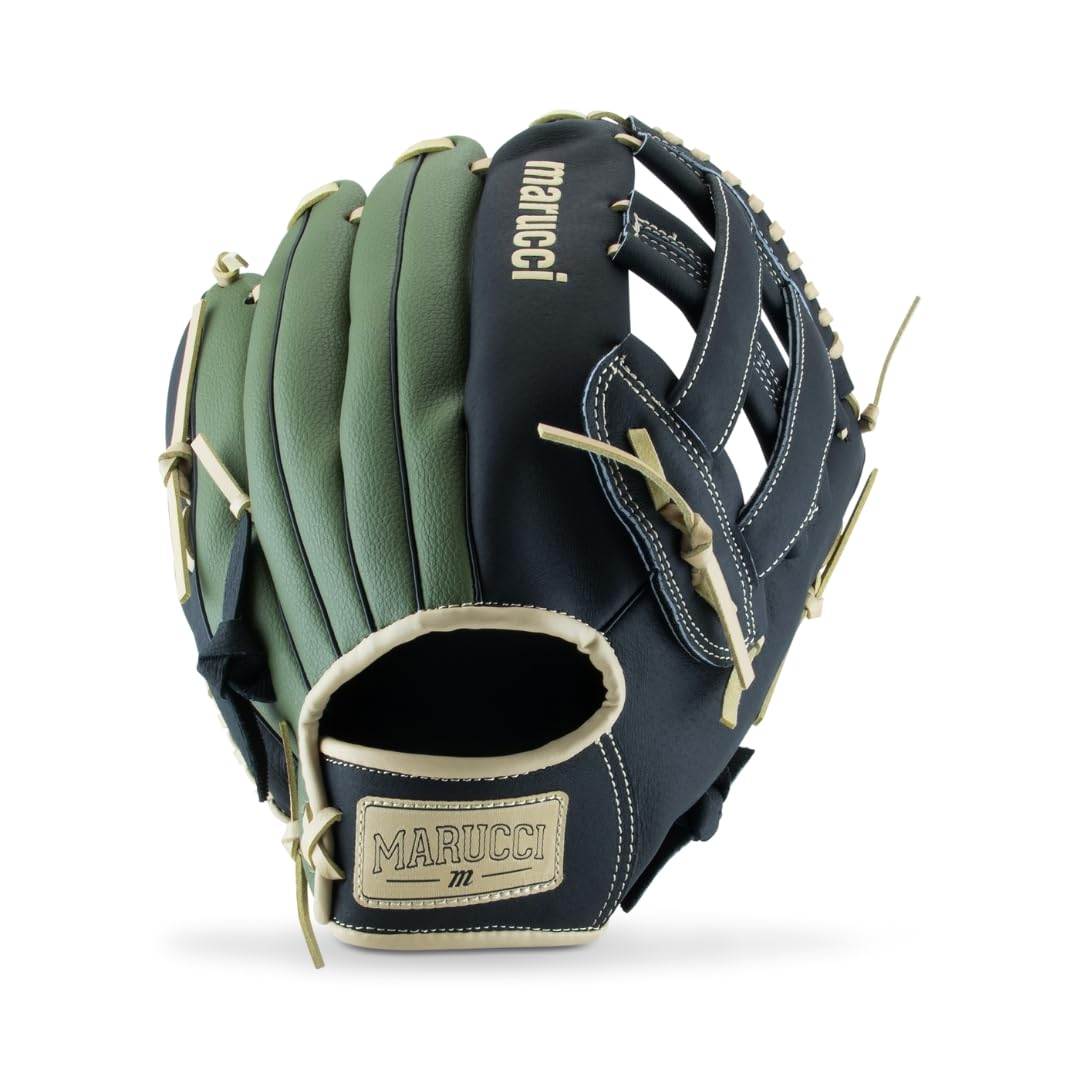
A Marucci nameplate with a 12.5-inch H-web that fits a growing teen.
The Marucci Swift is a newer option that bridges youth and adult sizing. At 12.5 inches (about 32 cm) with an H-web (a vertical opening between thumb and index finger, popular with infielders), it is a solid intermediate step for a player who has outgrown little league gloves but is not ready for a top-tier adult model. The construction blends real leather and synthetic materials (man-made material) to keep weight down while providing solid durability. Buyers report it fits a 14-year-old’s hand perfectly and came “almost ready to use” from the start.
Quality is the top positive note, with owners impressed by the material feel and easy break-in. Fit is the second most-discussed strength, running true for a youth in the 10-14 age range. The glove is designed for outfield play, with the H-web providing a deep pocket for tracking fly balls. The break-in is easy, though not zero — a few owners note it took a “labor of love” to get the hinge right. It also has a relatively small number of reviews compared to other picks, so long-term durability data is still building.
This is a strong pick for an older kid who wants a Marucci — a respected brand in baseball — without paying a premium price.
Lightweight design: an 8U-14U player transitioning to a larger glove who wants reliable brand quality at a reasonable price.
6. Wilson A700 Baseball Glove
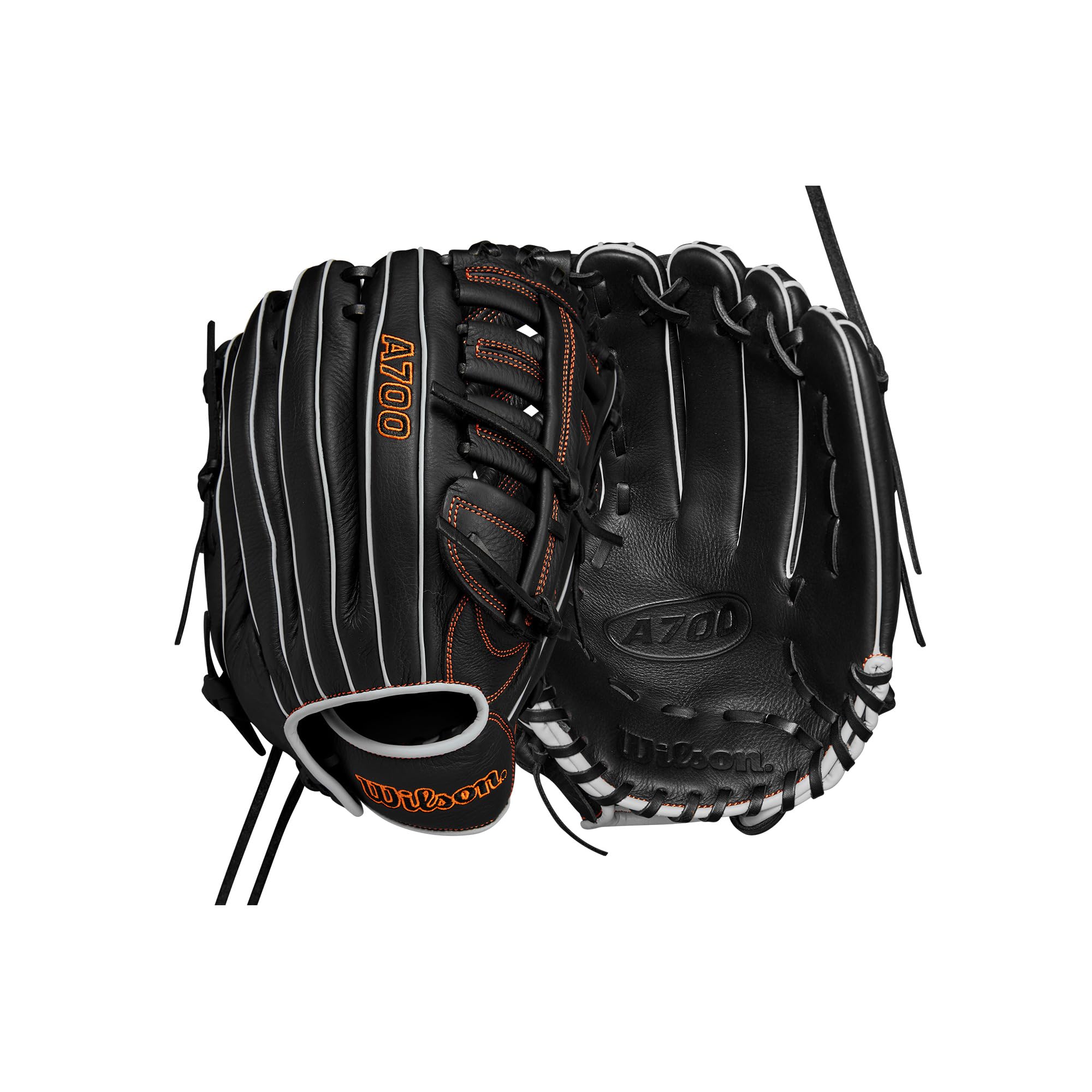
Full-grain cowhide leather sized for an adult with big hands.
You feel the material upgrade immediately. The Wilson A700 uses full-grain cowhide leather (the toughest, highest-quality cut of cow hide) — not a blend or a lower-grade split. The 12.5-inch (about 32 cm) outfield model is designed for tracking fly balls, and the leather lining adds interior toughness. Buyers with very large hands (some who wear 3X gloves) report this is the first glove that fits them comfortably. It arrives about 70 percent broken in, needing some catch work to finish the pocket.
Quality is the most praised aspect, with the cowhide leather getting specific credit for its feel and smell. Value for money is the second top note — several owners compare it favorably to more expensive gloves, calling it a “surprisingly great deal.” The grip and break-in also earn positive marks. The only mixed feedback is on fit for smaller adults. At 12.5 inches with a full-grain build, it is bulky; if you have smaller hands or want a tight infield feel, the A700 may feel oversized. It is built for outfield play and larger hands.
If you are an adult looking for a real cowhide glove that feels like it should cost twice as much, this is your best bet in the budget-adjacent range.
All-around use
- Full-grain cowhide leather for premium durability
- Great for large hands
- Excellent value compared to higher-priced gloves
Basic leather
- 12.5″ outfield size may be too bulky for infield use
- Not the best fit for smaller hands
Casual play: you are an adult with larger hands looking for a full-grain leather glove without a premium price.
Competitive: you have small hands or need a quick, shallow pocket for infield work.
7. Rawlings Renegade Adult Baseball Glove

A game-ready glove for the recreational player who wants to catch from day one.
The Rawlings Renegade is designed for the casual adult player, not the serious weekend warrior. It uses a leather shell palm (a genuine leather palm panel) with a lightweight pro mesh back (a breathable, synthetic fabric) — a construction that keeps the glove light while catching balls reliably. The cushioned palm and index finger pads provide solid impact protection, and the glove arrives 90 percent broken in from the factory. Owners mention using it immediately for a softball game and catching everything, with no preliminary break-in work.
Quality is the leading strength here, followed closely by value for money. Owners appreciate that it does not feel cheap and that it fits an adult hand well. The comfort of the cushioned pads is a nice bonus for casual use. Durability receives more mixed feedback than the higher-priced Rawlings Sandlot below. Some owners note it softens and works well, while others say it is not built for long-term, high-intensity use. This is a recreational glove, not a league-level model. If you play a few times a month, it will last you well.
The Renegade is the right pick if you need a glove that works on the first throw and you do not plan to play multiple times a week.
Adult sizing: an adult who wants a cheap, functional glove for occasional softball or catch without any break-in effort.
8. Rawlings Sandlot Baseball Glove

An 80-percent broken-in glove built from oiled leather that gets better the more you use it.
The Rawlings Sandlot uses full-grain oiled shell leather (a tougher, thicker material soaked in oil for flexibility) that is built to absorb repeated pounding and hold its shape for years. The 11.75-inch (about 30 cm) modified trap-eze web (a deep, wide web) makes it a versatile utility glove. It arrives 80 percent broken in from the factory, which is accurate; it hinges well from the start but stays noticeably stiffer than the “soft” gloves above. Customers note it needs mink oil (a leather conditioner) and some mallet work to fully finish the pocket, but the result is a glove with high-quality leather and excellent durability.
Quality is the top praise, with owners calling it “an absolute steal for the price point.” Value for money is the second-strongest note — the oiled leather at this price is a genuine deal. The padding and durability also earn positive marks. The main trade-off is the break-in effort. This is not a glove for a child or a casual player who wants instant softness. It requires a dedicated owner willing to put in the work. The payoff is a glove that molds perfectly to your hand and lasts many seasons. Buyers also love the vintage Sandlot aesthetic, with one fan noting the nostalgia is strong enough that their kids wanted to watch the movie.
If you value leather quality and are willing to invest a few evenings into break-in, the Sandlot delivers pro-level feel for a fraction of the cost.
Classic leather
- Full-grain oiled leather is extremely durable
- 80% factory break-in is a genuine head start
- Vintage design with modern performance
Long break-in
- Requires significant additional break-in effort
- Too stiff for young or casual players
Traditional: you are a dedicated player who wants a durable, high-quality leather glove and is happy to break it in.
Quick use: you need a glove that is soft and game-ready immediately.
9. Franklin Sports CTZ5000 Baseball Glove
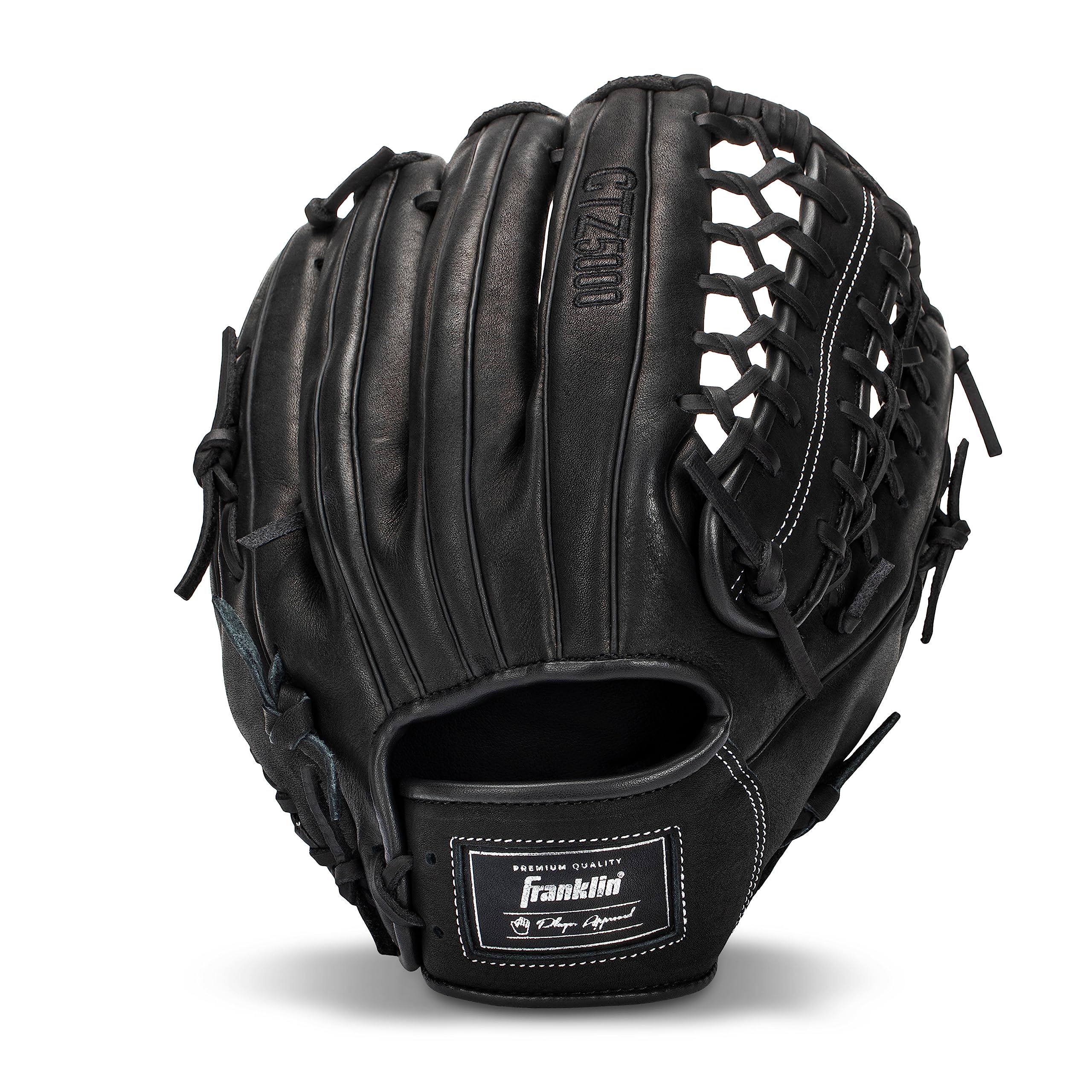
Full-grain cowhide with a trapeze web built for the serious outfielder.
The CTZ5000 is Franklin’s premium entry, and it competes directly with gloves from Rawlings and Wilson. It uses full-grain cowhide leather (the toughest cow leather) — the same material found on gloves that cost nearly double — and pairs it with a modified trapeze webbing (a wide, deep web) that creates a secure pocket for tracking long fly balls. The soft palm lining is cushioned for all-day comfort, and the chrome accent stitching gives it a polished look. Reviewers point out it feels “soft yet tough” and smells like real leather, not plastic. The fit is true for an average adult hand, and the break-in is minimal — some shoppers say it is fairly broken in from the start, needing only a bit of pocket-forming.
Quality is the top praise, with owners impressed by the all-leather build. Value for money is the second most-discussed strength. The full-grain cowhide is a genuine step up from entry-level pigskin gloves. The main areas of mixed feedback are fit and durability. Some find the glove runs a bit small for larger hands, and a small number of buyers report leather straps breaking over time. This glove works best for average to smaller adult hands, not for those who need an oversized mitt.
If you play regularly and want a glove that looks and feels premium without entering a higher price range, the CTZ5000 is a strong contender. It is particularly suited for outfielders and high school-level play.
Budget friendly: a regular player or high-school athlete who wants a full-grain cowhide glove with a deep pocket at a mid-range price.
Understanding the Specs
Break-In Level
This tells you how much work is needed before the glove is ready for a game. A “Ready-to-Play” or “Soft” break-in glove can be used immediately — the leather is already flexible and easy for a young hand to squeeze closed. “80% or 90% Factory” means the glove is hinged and shaped but still needs some work (catching practice, sometimes a light oil treatment) to fully form the pocket (the leather cradle that holds the ball). For a child or a casual adult, a softer break-in is almost always the better choice. For a serious player who wants the glove to mold to their exact hand, a stiffer factory break-in delivers a more personalized fit.
Web Style
The webbing connects the thumb and index finger. A basket web is closed (no gaps) and is great for infielders because it hides the ball from the hitter. An H-web has a vertical gap, providing a deep pocket while still letting infielders see through it. A modified trap-eze or trapeze web has a wider, deeper pocket design that helps outfielders track and secure fly balls. For a first glove that will be used at multiple positions, a basket web or an H-web is the safest, most versatile choice.
Leather Type
Full-grain or top-grain leather (the highest-quality cut of animal hide) is the most durable and will form the best pocket over time, but it is heavier and often stiffer. Pigskin leather (leather from a pig) is lighter and softer while still being tough, making it a great choice for youth gloves. Synthetic leather (man-made material) or a leather shell (real leather outer layer) with a mesh back (breathable fabric) trades some long-term durability for a much lighter weight and lower price. For a budget glove that will last more than a season, look for at least a leather shell palm, even if the back is synthetic.
Glove Size and Hand Orientation
Glove size is measured in inches from the heel to the tip of the index finger. A 9-11 inch glove is for tee-ball and very young players (ages 4-7). An 11.5-12 inch glove fits youth league (ages 8-12). 12.5-13 inches is adult size. “Right Hand Throw” means you throw with your right hand, so you wear the glove on your left hand — and vice versa. Always check this, as ordering the wrong orientation is a common mistake.
FAQ
How do I know what size glove my child needs?
What does “Right Hand Throw” mean for a baseball glove?
Is a “Ready-to-Play” glove actually ready to use in a game?
How long does it take to break in a budget baseball glove?
What is the difference between a basket web and an H-web?
Does a more expensive glove always last longer?
Can an adult use a youth baseball glove?
How do I care for a budget leather glove to make it last longer?
Why does my child’s new glove feel so stiff?
What is the difference between cowhide and pigskin leather in a baseball glove?
Final Thoughts: The Verdict
For the majority of shoppers, the best budget baseball glove is the Easton Moxie Youth because of its soft, game-ready leather, Zero Shock sting protection, and proven fit for young starters. If you are buying for an older youth player who needs a versatile, durable glove, the Wilson A500 is the top mid-range pick with top grain leather and an almost instant break-in. And for an adult who just wants a reliable, low-cost glove for casual catch, the Franklin RTP Pro delivers genuine pigskin leather at a price that