
Our readers keep the lights on and the weekend projects moving. As an Amazon Associate, I earn from qualifying purchases.
The gap between what you *want* to shoot—a bird at the feeder, a distant mountain, your kid’s soccer goal—and what your phone actually delivers is measured in millimeters of optical glass. A true cheap camera for photography exists to close that gap with a real lens, a real sensor, and real manual control, all without asking you to re-mortgage your kitchen. The trick is knowing which specs matter and which are just marketing noise.
I’m Rikta — the co-founder and writer behind FitlyFast. I’ve spent hundreds of hours analyzing sensor resolutions, optical zoom ranges, autofocus point counts, and stabilization systems across the sub- market to separate genuine value from spec-sheet fluff.
Each of these cameras was selected for a specific reason: a class-leading 52x optical zoom, a full-frame sensor at an entry-level price, or a compact 30x Leica lens that slides into a coat pocket. This guide is your shortcut to finding the cheap camera for photography that actually fits your life.
How To Choose The Best Cheap Camera For Photography
“Cheap” in the camera world means specific trade-offs. The goal isn’t to find the lowest price—it’s to find the camera that puts its limited budget exactly where it matters for the kind of photography you actually do. Here’s what to prioritize.
Optical Zoom: The Real Reach Test
Ignore digital zoom entirely. The number that matters is the *optical* zoom ratio printed on the lens barrel. A 30x zoom (like the Panasonic ZS99) covers everything from a 24mm wide-angle landscape to a 720mm telephoto bird shot. The Kodak AZ528 goes even further at 52x. For a cheap DSLR or mirrorless kit with an 18-55mm lens, the reach is much shorter, but the sensor quality is higher. Your choice here defines what subjects you can actually frame.
Sensor Size vs. Megapixels
A 20-megapixel 1-inch sensor will almost always outperform a 24-megapixel 1/2.3-inch sensor in low light, despite having fewer pixels. Larger pixels capture more light. In the budget tier, the Sony RX100 VII (1-inch stacked CMOS) and the Panasonic G85 (Micro Four Thirds) sit above the tiny sensors in superzoom compacts. Know your shooting environment: well-lit outdoor scenes are forgiving; evening indoor shots reward a bigger sensor.
Stabilization Systems
Handheld telephoto shots at 600mm equivalent are basically impossible to hold steady without help. Look for optical image stabilization (OIS) in the lens and, ideally, in-body stabilization (IBIS) in the camera body. The Panasonic G85 offers dual stabilization, combining both, which is rare at this price. The Kodak AZ528 has OIS built-in. Without stabilization, you’ll need a tripod or you’ll delete more shots than you keep.
Quick Comparison
On smaller screens, swipe sideways to see the full table.
| Model | Category | Best For | Key Spec | Amazon |
|---|---|---|---|---|
| Canon EOS R100 | Mirrorless | Mirrorless beginners | 143 autofocus points | Amazon |
| Nikon D3200 | DSLR (Renewed) | Traditional DSLR feel | 24.2 MP DX sensor | Amazon |
| Canon EOS RP | Full-Frame Mirrorless | Full-frame on a budget | 26.2 MP full-frame sensor | Amazon |
| Panasonic LUMIX G85 | Mirrorless | Stabilized video/photo | 5-axis in-body stabilization | Amazon |
| Kodak PIXPRO AZ528 | Superzoom | Wildlife reach on a budget | 52x optical zoom | Amazon |
| Canon EOS Rebel T7 | DSLR Bundle | All-in-one starter kit | 24.1 MP APS-C sensor | Amazon |
| Panasonic LUMIX ZS99 | Compact Travel Zoom | Pocketable travel zoom | 30x Leica zoom (24-720mm) | Amazon |
| Sony Alpha a3000 | Mirrorless | Ergonomic mirrorless entry | 20.1 MP APS-C sensor | Amazon |
| Sony RX100 VII | Premium Compact | Pro-grade pocket camera | 1-inch stacked CMOS sensor | Amazon |
In‑Depth Reviews
1. Canon EOS R100 Mirrorless Camera

The EOS R100 is the smallest body in Canon’s RF mirrorless line, but its 24.1-megapixel APS-C sensor and DIGIC 8 processor deliver image quality that punches well above its weight. The kit lens (RF-S 18-45mm) is compact, and the Dual Pixel CMOS AF covers up to 143 zones with human, animal, and vehicle detection—a massive advantage over entry-level DSLRs with far fewer focus points. For beginners stepping into interchangeable-lens photography, this is the cleanest on-ramp to the modern mirrorless ecosystem.
Fast continuous shooting at 6.5 frames per second (One-Shot AF) means you can capture motion—kids running, pets playing, even a darting bird—with a much higher keeper rate than the 3-4 fps you’ll get from budget superzooms. The 4K video mode is a bonus, though it’s capped at 24 fps, which is fine for cinematic clips but not smooth motion work. The camera’s rear LCD is not fully articulating, which matters if you do a lot of overhead or ground-level composition.
Overall, the R100 offers the best balance of sensor quality, autofocus sophistication, and lens-system expandability at this price tier. It’s cheap in cost, not in capability.
Why it’s great
- Dual Pixel CMOS AF with 143 zones—category-leading autofocus for the price
- Compact, lightweight body; smallest in the EOS R series
- Fast 6.5 fps burst for action shots
Good to know
- 4K video limited to 24 fps
- No fully articulating touchscreen
- Lens kit aperture relatively slow (f/4.5-6.3)
2. Canon EOS RP + RF24-105mm Lens Kit

The EOS RP is the least expensive full-frame mirrorless camera you can buy new, and that one sentence defines its value proposition. A full-frame sensor (26.2 MP) captures dramatically more light than an APS-C sensor, which translates to shallower depth of field, cleaner high-ISO performance, and better dynamic range for landscape and portrait work. The RF 24-105mm f/4-7.1 IS STM kit lens includes up to 5 stops of optical stabilization, making handheld shooting in dim interiors genuinely usable.
Users upgrading from crop-sensor DSLRs (like the Canon T3i or Nikon D3500) consistently report a jump in image depth and fine detail, especially with adapted manual lenses. The electronic viewfinder is crisp, the flip screen is great for waist-level and overhead shots, and the menu system is identical to Canon’s higher-end bodies, so the learning curve is shallow. Battery life is acceptable—expect about 3 hours of mixed shooting—and third-party spares are cheap.
Where the RP cuts corners is speed: it’s not built for fast-action sports or birds in flight. The burst rate is modest, and autofocus tracking (while good) won’t match the RX100 VII’s real-time system. But for portrait, travel, and general photography where sensor quality is the priority, the RP is the ultimate budget entry into full-frame.
Why it’s great
- Full-frame sensor at entry-level pricing—huge low-light advantage
- RF 24-105mm kit lens with 5-stop stabilization
- Compact, lightweight full-frame body, great for travel
Good to know
- Not built for fast sports or continuous action tracking
- 4K video has crop and no Dual Pixel AF
- Battery life is moderate; carry a spare
3. Sony RX100 VII
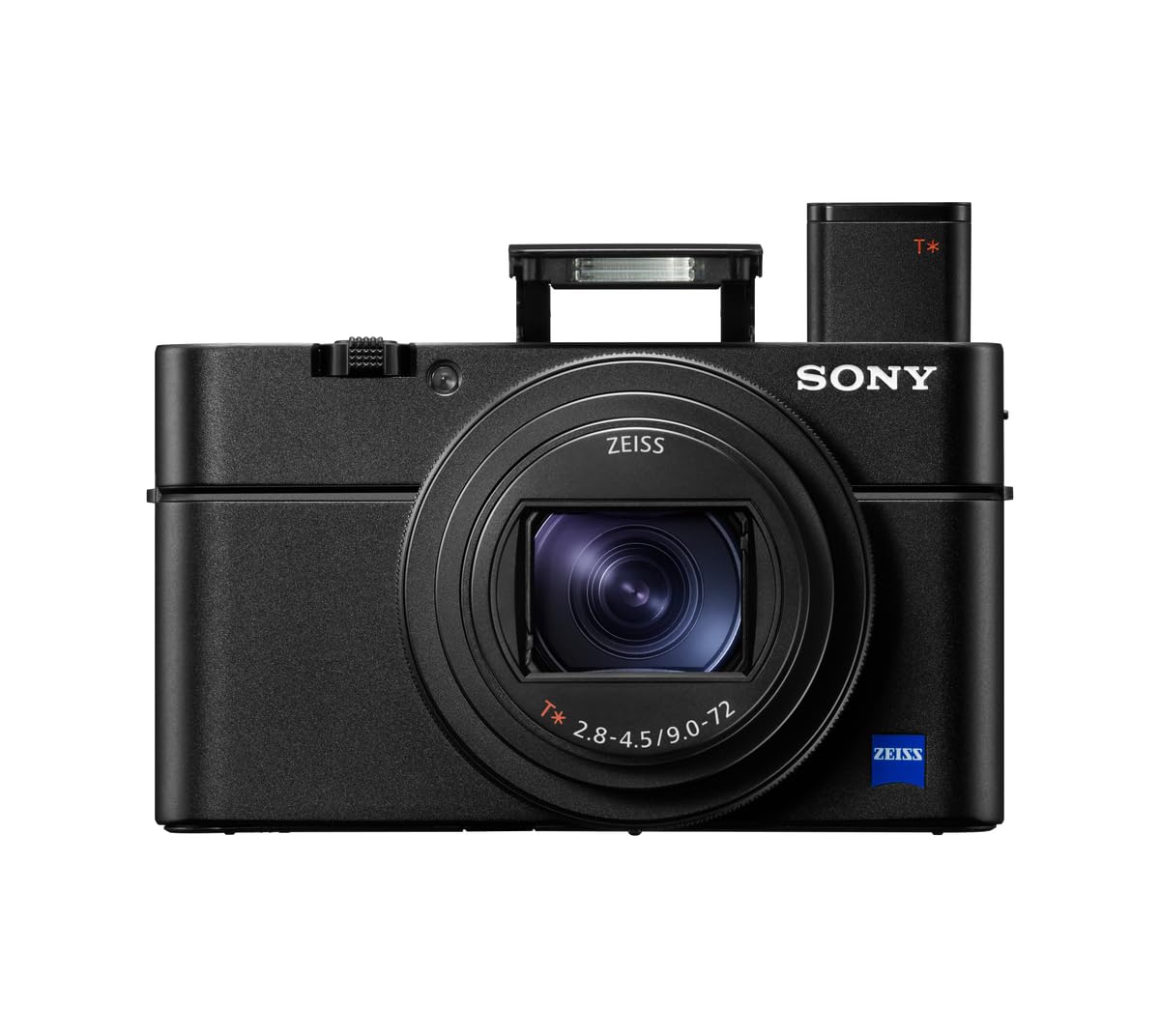
The RX100 VII is the pocket powerhouse that enthusiasts dream about. Its 1-inch stacked CMOS sensor and 24-200mm f/2.8-4.5 Zeiss Vario-Sonnar T* lens pack more photographic capability into a jacket pocket than many DSLRs with a single zoom lens. The stacked sensor enables blackout-free shooting at 20 fps with continuous AF/AE tracking—a spec that rivals professional sports bodies. The real-time tracking and Eye AF (human and animal) is AI-based and remarkably sticky, locking onto faces and eyes even as subjects move unpredictably.
Image quality is outstanding for the size: sharp across the frame at wide-angle, with usable ISO up to 3200 before noise becomes intrusive. The 4K video includes S-Log3 for color grading and a microphone input, making it a serious B-cam or primary vlogging tool. The built-in pop-up electronic viewfinder is a game-changer for bright daylight composition when the LCD is washed out.
No camera is perfect—the small body means small buttons and a learning curve for menus, and the fixed lens means you’re locked into that 24-200mm range forever. But if your priority is maximum image quality in a pocket-ready size with professional-grade autofocus, the RX100 VII sets the standard.
Why it’s great
- 0.02-second autofocus with 425 phase-detection points
- Blackout-free 20 fps burst shooting
- 24-200mm Zeiss lens in a pocket-sized body
Good to know
- Fixed zoom lens limits flexibility compared to ILC systems
- Slippery body texture, many users add a grip
- Menu system is deep; takes time to master
4. Panasonic LUMIX G85 with 12-60mm Lens

The G85 occupies a sweet spot in the budget mirrorless market: it offers in-body 5-axis stabilization (IBIS) that works in tandem with the lens’s optical stabilization, producing what Panasonic calls Dual I.S. 2. This is a rare spec below six hundred dollars and makes a tangible difference when shooting handheld video or telephoto stills in dim light. The 16-megapixel Micro Four Thirds sensor omits the low-pass filter, which resolves fine detail—think fabric texture, leaf veins—with near-APS-C clarity in good light.
The magnesium alloy body is weather-sealed against dust and splashes, so you’re not panicking at the first drop of rain. The 3-inch tilt touch LCD (1.04M dots) and eye-level OLED viewfinder (2.36M dots) are both crisp and usable. The 12-60mm kit lens covers a very useful 24-120mm equivalent range, and the 4K Photo mode lets you extract 8-megapixel frames from 30fps bursts—a practical compromise for action when you don’t need 20-megapixel resolution.
Lens availability for Micro Four Thirds is excellent, with affordable primes from Panasonic, Olympus, and third parties. The main trade-off: the smaller sensor means less background separation than a full-frame camera, but the stabilization and build quality make it a more capable daily driver than similarly priced APS-C bodies that lack IBIS.
Why it’s great
- 5-axis Dual I.S. 2 stabilization—best-in-class for the price
- Weather-sealed magnesium alloy body
- Excellent lens ecosystem via Micro Four Thirds
Good to know
- 16 MP sensor is lower resolution than APS-C competitors
- Battery life is moderate; carry a spare for full-day shoots
- Slightly heavier than other entry mirrorless bodies
5. Kodak PIXPRO Astro Zoom AZ528
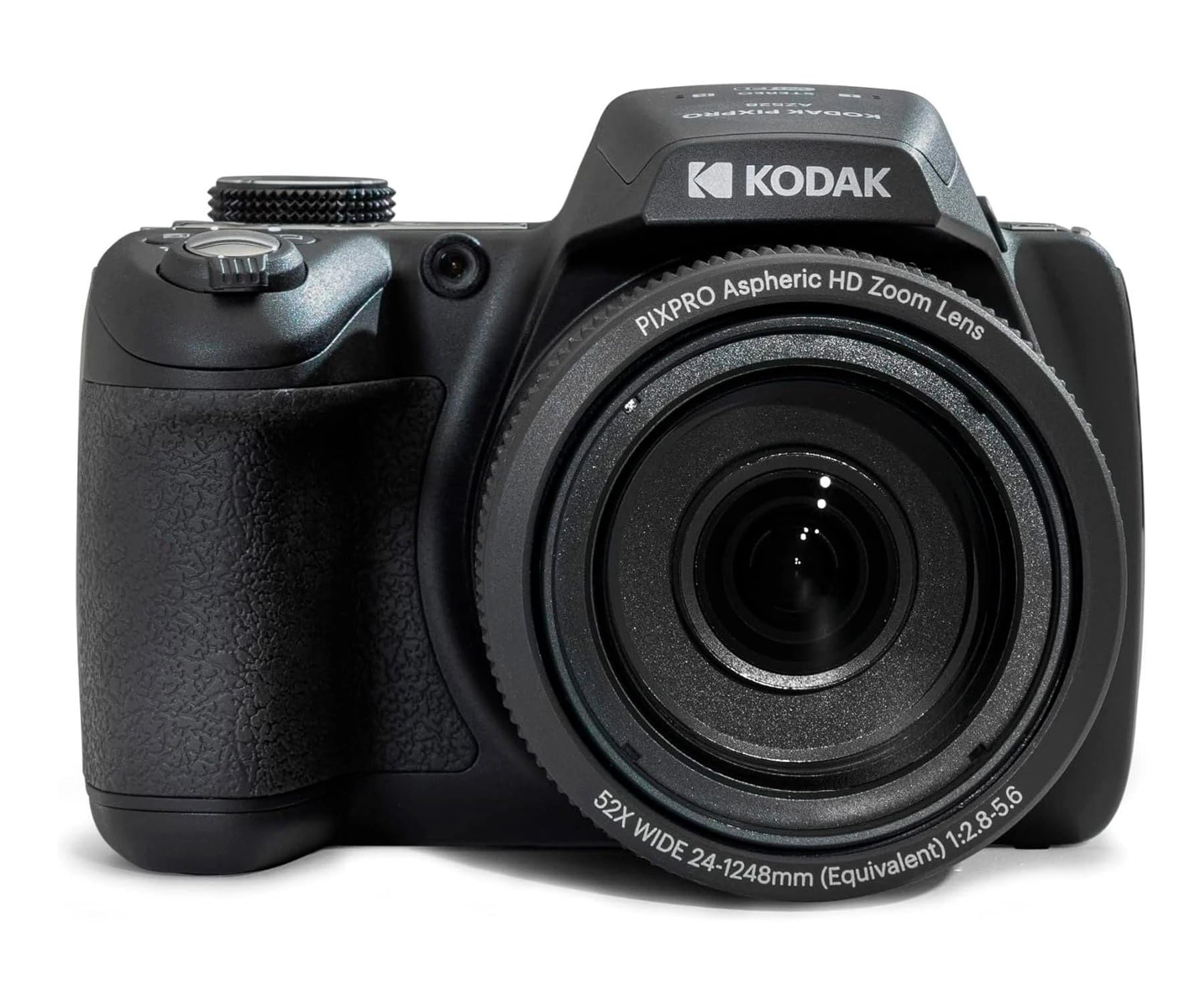
No camera in this list can reach a subject 52 times closer than its widest angle except the AZ528. That extraordinary 24-1248mm equivalent zoom range makes it the definitive budget choice for wildlife photographers, birders, and sports fans who need to fill the frame with distant action. The 16-megapixel backside-illuminated CMOS sensor captures clean images in good light, and the optical image stabilization helps keep handheld telephoto shots from turning into blurry blobs. At maximum zoom, steady hands are still a must, but OIS gives you a fighting chance.
The camera includes built-in Wi-Fi for quick image transfer to your smartphone—useful for sharing a bird sighting or game highlight without waiting to get home. The 6 fps burst mode captures short sequences of flying birds or sprinting athletes, though the buffer fills quickly, so it’s best used in short bursts. The full HD 1080p video is adequate for casual clips but not a primary feature.
The AZ528’s limitations are those of all superzoom compacts: the small sensor struggles in low light, and the plastic body feels less premium than a DSLR. Battery life is short enough that carrying a spare is wise. But for anyone whose main frustration is “I can’t get close enough,” this camera solves that problem for a very low entry cost.
Why it’s great
- 52x optical zoom (24-1248mm) — best reach in its class
- Optical image stabilization for handheld telephoto shots
- Built-in Wi-Fi for easy photo sharing
Good to know
- Small sensor limits low-light image quality
- Battery life is short; carry a spare for full-day shoots
- Plastic body may scuff with regular use
6. Nikon D3200 with 18-55mm (Renewed)
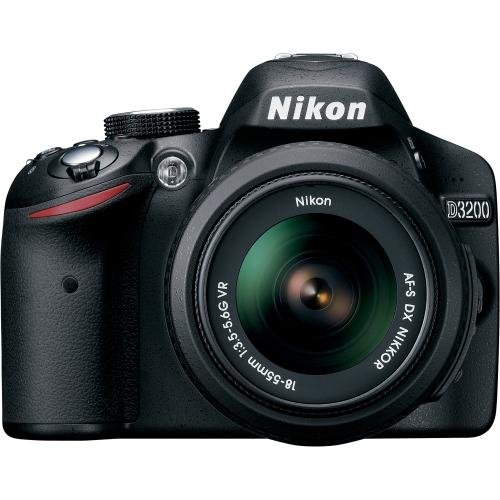
If you want a traditional DSLR experience—optical viewfinder, familiar grip, and a massive ecosystem of affordable F-mount lenses—the refurbished D3200 is the strongest budget play. The 24.2-megapixel DX-format APS-C sensor and EXPEED 3 processor produce sharp, detailed images with good color accuracy and wide dynamic range for its era. The 18-55mm VR (vibration reduction) kit lens reduces the impact of hand shake, and the battery life is exceptional—around 500 shots per charge according to owners.
Autofocus is reliable in good light and adequate indoors, using 11 contrast-detection points. It’s not sport-grade, but for portraits, landscapes, and everyday subjects, it locks quickly. One-touch 1080p video at 30 fps is decent for casual clips, though the D3200 lacks 4K. The guide mode built into the camera walks absolute beginners through aperture, shutter speed, and ISO settings, making it one of the most teachable entry-level DSLRs ever made.
Being a refurbished model (manufacturer-certified), the cost is dramatically lower than new, but you sacrifice Wi-Fi connectivity and modern smartphone integration. If you’re okay with physically transferring files via SD card or USB cable, the D3200 offers the most image-quality-per-dollar of any camera on this list.
Why it’s great
- 24.2 MP APS-C sensor delivers excellent image quality for the price
- Long battery life (~500 shots per charge)
- Huge selection of affordable used F-mount lenses
Good to know
- No built-in Wi-Fi for direct smartphone transfer
- 11 autofocus points limited for action photography
- Refurbished condition may show minor cosmetic wear
7. Canon EOS Rebel T7 DSLR Bundle
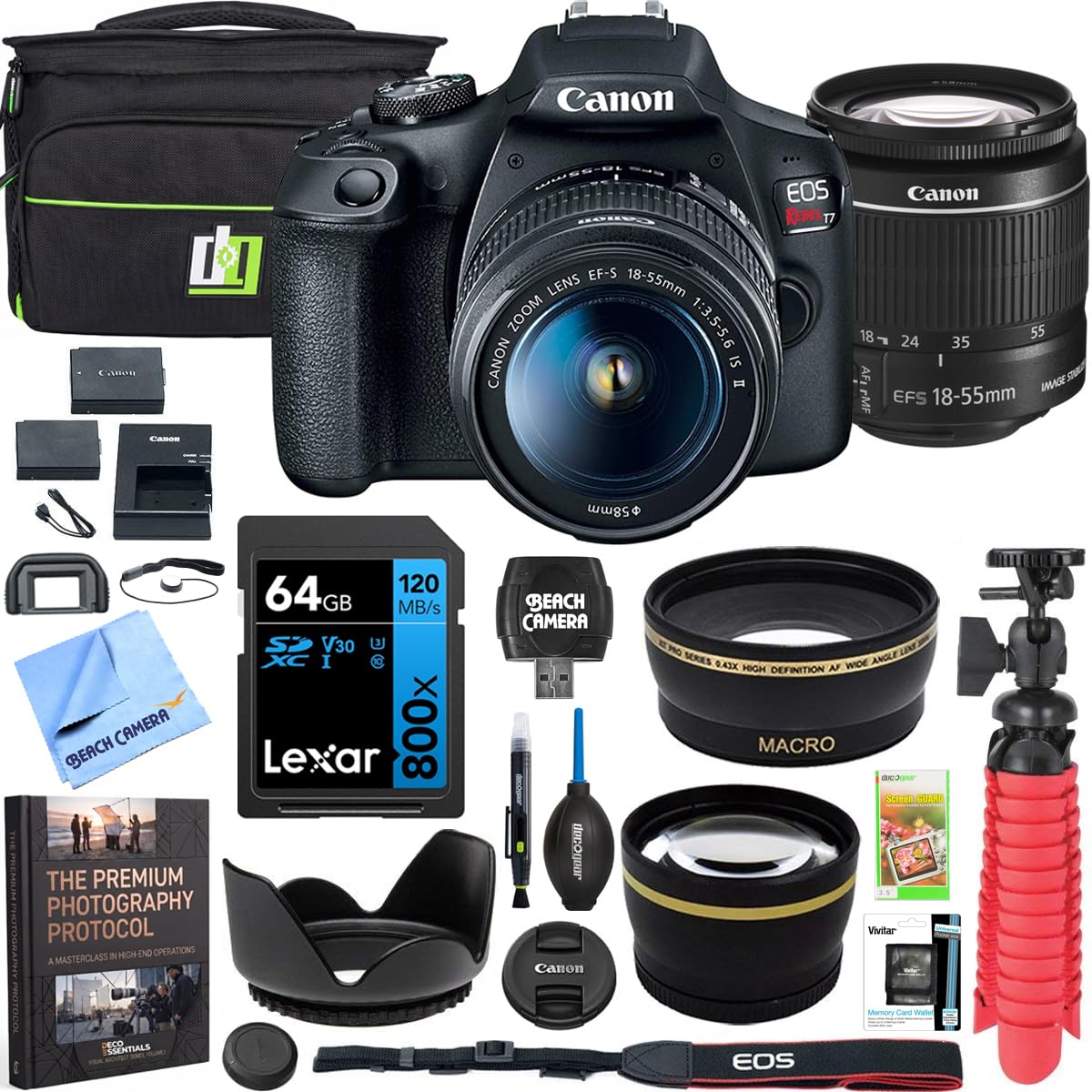
The Rebel T7 is Canon’s entry-level DSLR, and the bundle version packages it with a massive accessory set: a bag, extra battery and charger, 64GB SD card, 58mm wide-angle and telephoto adapter lenses, tripods, cleaning kit, and more. For someone who has nothing and needs everything, this is the turnkey solution. The camera itself is a proven 24.1-megapixel APS-C shooter with a 9-point autofocus system, Wi-Fi for smartphone transfer, and an 18-55mm IS II lens that covers standard walk-around focal lengths.
Owner feedback is generally positive on image quality and ease of use, but the included accessories vary in quality—the tripod is functional but lightweight, and the wide-angle/telephoto adapters degrade image sharpness compared to a dedicated lens. The battery life on the T7 is rated for about 500 shots, though some users report the included aftermarket battery drains faster than the OEM model. Wi-Fi transfer works reliably via the Canon Camera Connect app.
This is the right pick if you want one box with everything needed to start shooting immediately, and you’re not a pixel peeper who needs the absolute sharpest image from every accessory. The camera body is solid; the extras are convenience items, not professional tools.
Why it’s great
- All-in-one bundle includes bag, cards, tripod, and more
- 24.1 MP APS-C sensor delivers good image quality
- Built-in Wi-Fi for easy photo sharing
Good to know
- 9-point autofocus system limited compared to newer cameras
- Bundle accessories (tripod, adapter lenses) are entry-level quality
- Some users report shorter battery life with aftermarket batteries
8. Panasonic LUMIX ZS99 Travel Zoom

The ZS99 (also known as TZ99 outside North America) is the ultimate pocket companion for travel photographers who refuse to carry a dedicated camera bag. The 30x Leica DC Vario-Elmar lens covers 24-720mm equivalent in a body that slides into a jeans pocket. That reach—from a wide-angle cityscape to a zoomed-in concert stage—is the entire reason to buy this camera. The 1,840k-dot tiltable touchscreen is sharp and responsive, and the built-in Bluetooth 5.0 with a dedicated Send Image button makes transferring photos to your phone nearly instant.
Image quality is very good in bright conditions up to ISO 1600, with natural color reproduction that requires minimal post-processing. The 4K Photo mode captures 30 fps bursts, and the 1080p slow-motion at 120 fps adds creative flexibility. The Lens Position Resume function remembers your last zoom setting when you power back on, which is surprisingly useful for following a stage performer or a hiking trail.
The ZS99’s small sensor (1/2.3-inch) is its main compromise—low-light performance falls off above ISO 1600, and you won’t get the shallow depth of field possible with an interchangeable-lens camera. The autofocus is hybrid (contrast + phase), but some users find it hesitant compared to the Sony RX100 series. For daylight travel memories, though, the ZS99 is the lightest, most practical superzoom you can buy.
Why it’s great
- 30x Leica zoom (24-720mm) fits in a pocket
- Bluetooth 5.0 with dedicated send button for quick file transfer
- USB Type-C charging and compact, travel-focused design
Good to know
- Small sensor limits low-light performance above ISO 1600
- Autofocus can be hesitant in dim conditions
- No built-in flash; relies on high ISO in dark environments
9. Sony Alpha a3000 with 18-55mm OSS

The a3000 is an oddity in the budget market—a mirrorless camera that wears a DSLR-like body with a deep, comfortable grip that Sony’s later NEX lineup lacked. The 20.1-megapixel Exmor APS-C sensor captures excellent images for its class, with good color science and wide dynamic range. The 18-55mm OSS (Optical SteadyShot) kit lens includes stabilization, and the built-in electronic viewfinder lets you compose in bright daylight without relying on the low-resolution rear LCD.
Focus peaking and manual focus assist make legacy lens adaptation easy, which is a key feature if you own vintage glass. The camera shoots full HD video, operates on standard USB charging, and uses the micro-HDMI port for external monitoring. Owners consistently praise the image quality and ergonomics, noting that the grip makes one-handed shooting comfortable and secure.
The a3000 shows its age in a few places: the EVF and LCD are low-resolution by modern standards, and the contrast-detection autofocus system (25 points) is slower than phase-detection systems found in newer Sony cameras. Battery life is notoriously short—expect 20-30% drain per hour of use, and the camera lacks an external charger in the box. For a budget mirrorless entry with an APS-C sensor and the flexibility of Sony E-mount lenses, it’s functional, but the technology is dated.
Why it’s great
- 20.1 MP APS-C sensor delivers good image quality for the price
- Exceptional ergonomics and grip for one-handed shooting
- Focus peaking makes manual lens adaptation easy
Good to know
- Contrast-detection autofocus is slower than modern phase-detection
- Battery life is poor; carries only about 2-3 hours of mixed use
- Low-resolution EVF and rear LCD compared to newer cameras
FAQ
What does 52x optical zoom actually mean for a cheap camera?
Is a refurbished DSLR like the Nikon D3200 a safe buy?
Which cheap camera offers the best low-light performance?
Final Thoughts: The Verdict
For most users, the cheap camera for photography winner is the Canon EOS R100 because it combines the modern mirrorless ecosystem with excellent 143-point Dual Pixel autofocus and a 24.1 MP APS-C sensor in a compact, affordable body. If you want full-frame image quality without spending full-frame money, grab the Canon EOS RP. And for pocketable reach that fits in a jacket—perfect for travel and concerts—nothing beats the Panasonic LUMIX ZS99.