
Our readers keep the lights on and the weekend projects moving. As an Amazon Associate, I earn from qualifying purchases.
Bringing the quiet discipline of a miniature tree into your home starts with a single honest question: do you have the patience for seeds or the need for an instant canopy? The indoor bonsai category splits sharply between complete starter kits that ask you to germinate from scratch and pre-grown specimens that arrive ready for display. Each path demands a different level of commitment, light management, and daily care rhythm.
I’m Rikta — the co-founder and writer behind FitlyFast. I’ve spent countless hours analyzing growing kits and live tree specifications, comparing seed viability claims with real customer germination rates, and weighing the build quality of ceramic pots against the practicality of expanding soil discs.
Whether you’re searching for a hands-on project to nurture over months or an instant living accent for a shelf, this guide cuts through the marketing to help you find the right indoor bonsai for your space and experience level.
How To Choose The Best Indoor Bonsai
The decision between a seed kit and a live tree defines your entire experience. Seed kits offer the journey of watching a plant emerge from nothing — but they require consistent warmth, humidity, and often a grow light. Live trees give you an immediate connection to the art form, but they arrive with specific watering needs and a sensitivity to transplant shock. Understanding your own tolerance for daily care is the first filter.
Seed Viability vs. Kit Completeness
A kit with five seed varieties is only as good as the germination rate of each. Many beginner kits include species like Blue Jacaranda or Delonix Regia, which have different stratification needs. Look for kits that offer extra seed packets and pre-fertilized expanding soil — these give you a second chance if the first batch fails. The presence of a wooden box or bamboo markers adds aesthetic value, but it does not guarantee that the seeds are fresh.
Tree Species and Indoor Suitability
Not all bonsai species tolerate indoor conditions year-round. Dwarf Jade (Portulacaria afra) is a succulent that handles low humidity and irregular watering — a strong choice for desks and offices. Chinese Sweet Plum needs bright indirect light and consistent moisture, but it can flower indoors during summer. Juniper bonsai, despite being the most iconic silhouette, actually prefer outdoor conditions with a winter dormancy period; keep it on a bright windowsill or patio rather than a dark corner.
Container Quality and Drainage
The pot is not just decoration — it dictates root health. Ceramic bonsai pots with drainage holes and a mesh screen prevent root rot, while basic plastic nursery pots demand careful watering discipline. A pre-grown tree sold in a glazed ceramic container typically costs more, but it eliminates the need to repot immediately. Seed kits that include burlap grow bags or coconut coir bricks allow roots to breathe, but they require you to transfer the sapling to a proper bonsai pot later.
Quick Comparison
On smaller screens, swipe sideways to see the full table.
| Model | Category | Best For | Key Spec | Amazon |
|---|---|---|---|---|
| Brussel’s Bonsai Dwarf Jade | Pre-Grown Tree | Instant desk greenery, low maintenance | 3 years old, 5-8 inches tall | Amazon |
| Brussel’s Bonsai Sweet Plum | Pre-Grown Tree | Mature indoor specimen with flowering potential | 5 years old, 6-10 inches tall | Amazon |
| Live Dwarf Juniper Bonsai | Pre-Grown Tree | Classic bonsai silhouette, indoor/patio display | 6 years old, ceramic fisherman pot | Amazon |
| AVERGO Bonsai Tree Kit | Seed Starter Kit | Families and beginners wanting extra seeds | 5 varieties, coconut coir soil | Amazon |
| Planter’s Choice Bonsai Kit | Seed Starter Kit | Gift-giving, complete tool set included | 5 varieties, burlap pots, bamboo markers | Amazon |
| LUOJIBIE 5-Variety Bonsai Kit | Seed Starter Kit | Budget entry, wooden box presentation | 5 varieties, pre-fertilized soil | Amazon |
| LUOJIBIE 4-Variety Bonsai Kit | Seed Starter Kit | Diverse species, bonsai clipper included | 4 varieties, Japanese Black Pine & Pagoda | Amazon |
In‑Depth Reviews
1. Brussel’s Bonsai – Live Dwarf Jade Bonsai Tree
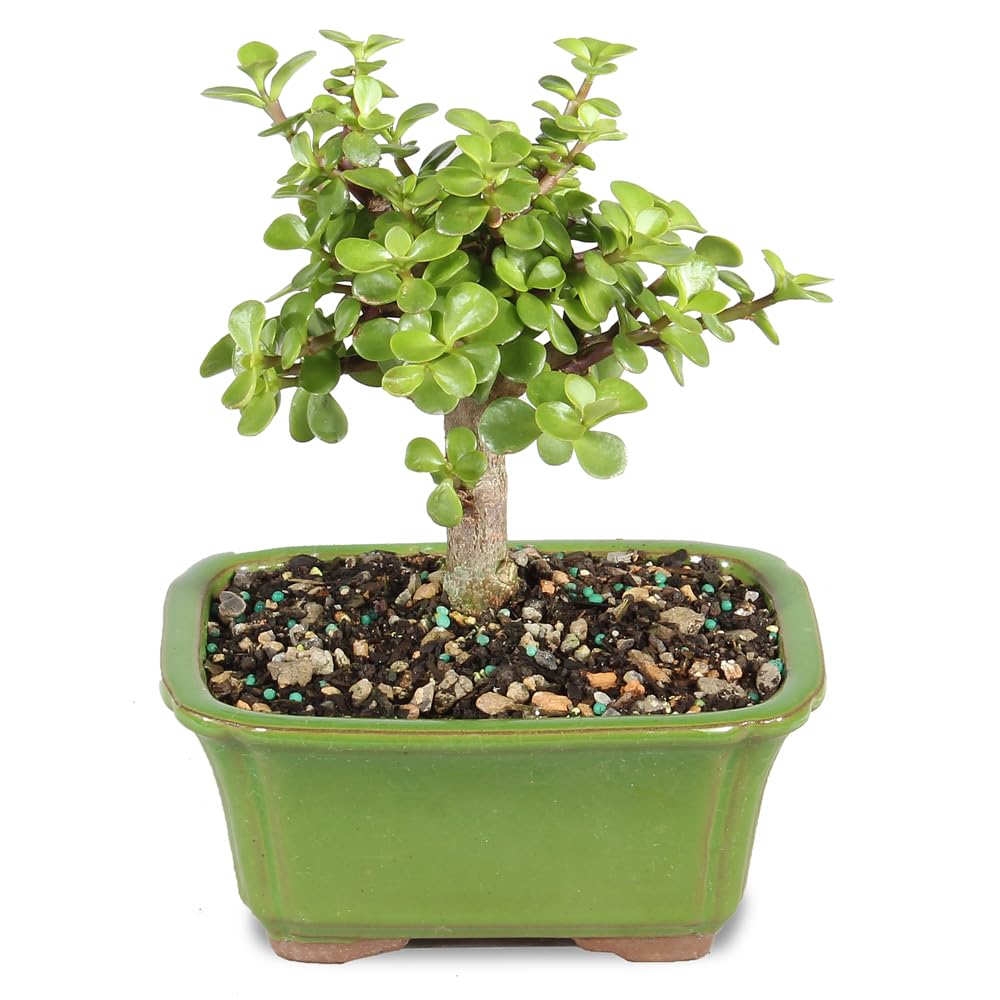
The Dwarf Jade (Portulacaria afra) is arguably the most forgiving indoor bonsai for people who travel or have inconsistent schedules. Its thick, woody trunk and small glossy leaves store water, so missing a watering by a day or two rarely causes damage. This three-year-old specimen arrives in a ceramic bonsai pot with soil already in place — you unbox it, place it on a bright windowsill, and start enjoying it immediately.
Customer feedback consistently praises the packaging and the health of the tree upon arrival, though a minority reports that the soil can arrive overly saturated, which risks root hypoxia. The solution is simple: upon unboxing, let the soil dry out for a few days before your first watering cycle. The tree itself is non-flowering, which means no cleanup from dropped petals, making it a clean choice for office desks or bedside tables.
At roughly three years of age, the trunk has begun to thicken, giving it a convincing miniature-tree appearance rather than a spindly sapling. For anyone who wants the aesthetic of an established bonsai without the steep learning curve of germination, this is the most reliable entry point in the category.
Why it’s great
- Succulent nature forgives irregular watering
- Arrives fully grown in a ceramic pot with drainage
- Thickening trunk provides authentic bonsai look immediately
Good to know
- Soil can arrive waterlogged; let it dry before first watering
- Non-flowering variety — no bloom interest
2. Brussel’s Bonsai – Small Chinese Sweet Plum Bonsai Tree
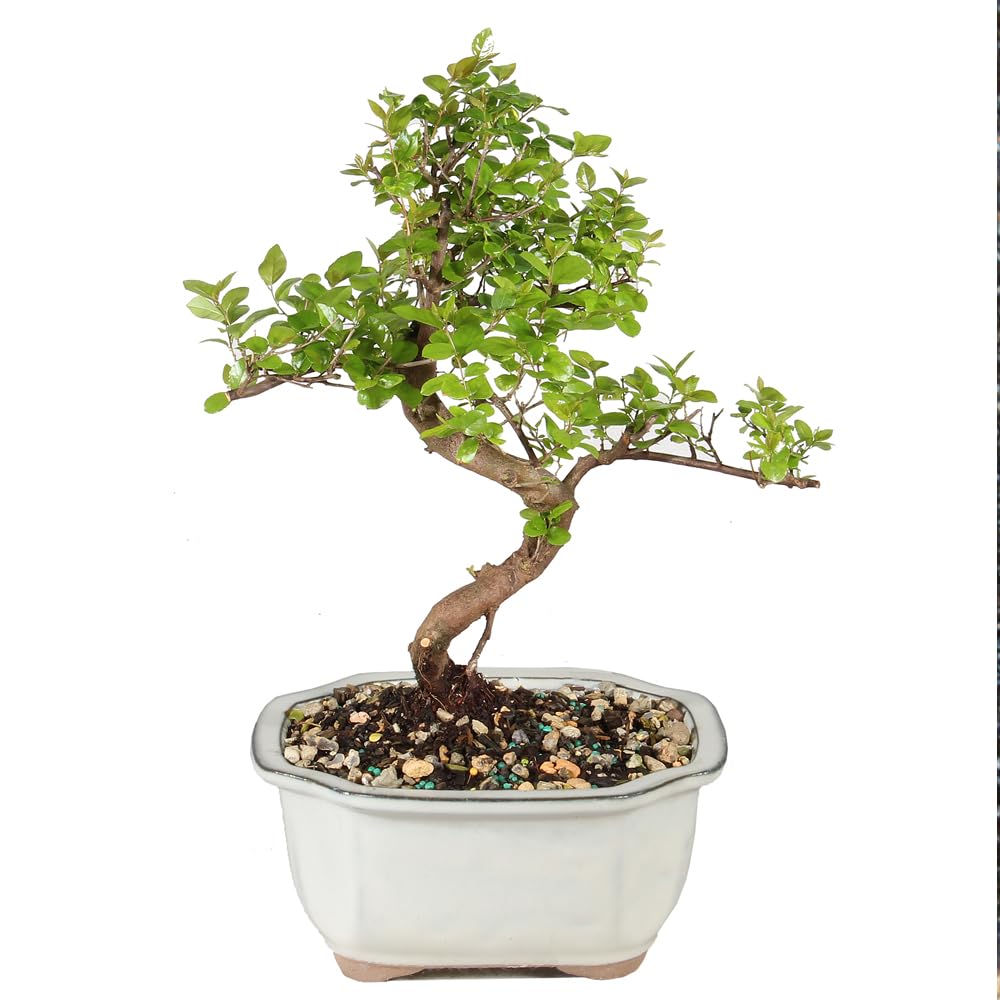
The Chinese Sweet Plum is a five-year-old tree with glossy green foliage that, under the right conditions, produces small white-pink blossoms in the summer. This is a step up in care complexity compared to the Dwarf Jade — it demands bright indirect light and consistent moisture, but the payoff is a more dynamic, flowering specimen that changes with the seasons. The ceramic pot is glazed and complements the tree’s refined branching structure.
Reviews indicate that the tree ships well and generally arrives with minimal leaf drop, but a small number of buyers report that the plum variety can be sensitive to changes in environment and may die within the first few weeks. This risk is higher if the tree is placed in low light or if the soil is allowed to dry out completely. The tree is best suited for a conscientious owner who monitors soil moisture daily.
At five years old, the trunk has developed noticeable taper and bark texture, giving it a mature silhouette that seed kits cannot produce for years. If you want a bonsai that can bloom indoors and you are willing to dial in your watering routine, this is a refined choice that rewards attention with seasonal color.
Why it’s great
- 5-year maturity provides thick trunk and branching structure
- Summer blooming potential adds seasonal interest
- Glazed ceramic pot is display-ready
Good to know
- Requires consistently moist soil and bright indirect light
- Some trees experience transplant shock after shipping
3. Live Dwarf Juniper Bonsai Tree with Ceramic Fisherman

This six-year-old Juniper bonsai comes with a glazed ceramic pot and a small fisherman figurine that turns the arrangement into a miniature landscape. The tree itself is handcrafted and each specimen has a unique shape, so what you receive will differ slightly from the product photo. The moss on top is artificial, which is a practical choice — it stays green without requiring misting.
Juniper bonsai are often marketed as indoor plants, but they actually need a period of winter dormancy and perform best when placed near a bright window or on a patio during frost-free months. Some customer reviews note that the tree is high-maintenance for a true indoor environment, requiring careful watering and occasional outdoor time. The soil should never dry out completely, and the foliage benefits from daily misting.
For buyers who want a classic bonsai silhouette — the iconic windswept look — this Juniper delivers. The ceramic fisherman adds a whimsical touch that makes it a memorable gift, but be prepared for a care routine that is more demanding than a succulent-based bonsai.
Why it’s great
- 6-year maturity gives substantial trunk and branch development
- Ceramic pot with figurine creates a complete display piece
- Classic Juniper silhouette for traditional aesthetic
Good to know
- Needs dormancy period and bright light — not a low-light plant
- Higher maintenance than succulent bonsai varieties
4. AVERGO Bonsai Tree Kit Classic
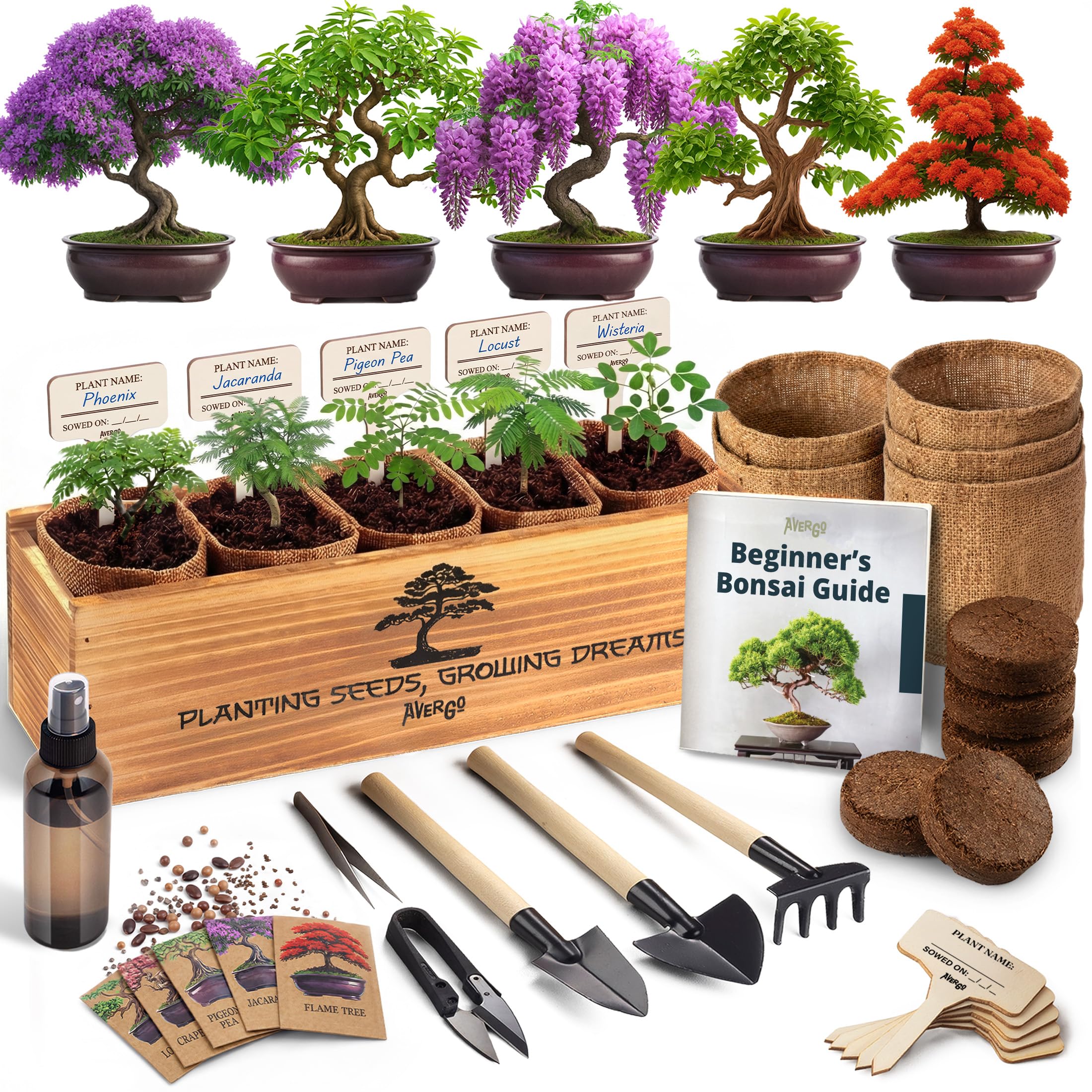
The AVERGO kit includes five seed varieties (Wisteria, Flame Tree, Blue Jacaranda, Pigeon Pea, and an additional surprise) along with extra seed packets to increase your chances of success. The kit uses coconut coir as the growing medium, which holds moisture well and provides good aeration for young roots. The wooden planter and basic bonsai tools give the package a premium feel that stands out among mid-range kits.
Customer feedback shows strong germination results for most varieties, though the Wisteria seeds tend to be less reliable and may develop mold if overwatered. The Pigeon Pea is the fastest grower, giving beginners early feedback that encourages them to continue. The extra seed packets are a genuine safety net — if the first round fails, you can replant without ordering a whole new kit.
For families or beginner adults who want a structured project with a high probability of seeing at least two or three species sprout, this kit delivers the best balance of completeness and price. The instructions are clear, and the tools are functional enough for initial pruning once the saplings reach a few inches tall.
Why it’s great
- Extra seed packets included for second attempts
- Wooden planter and tools elevate the unboxing experience
- Pigeon Pea germinates quickly, building beginner confidence
Good to know
- Wisteria seeds have lower germination rate and may mold
- Requires patience — visible growth takes weeks
5. Planter’s Choice Bonsai Tree Starter Kit
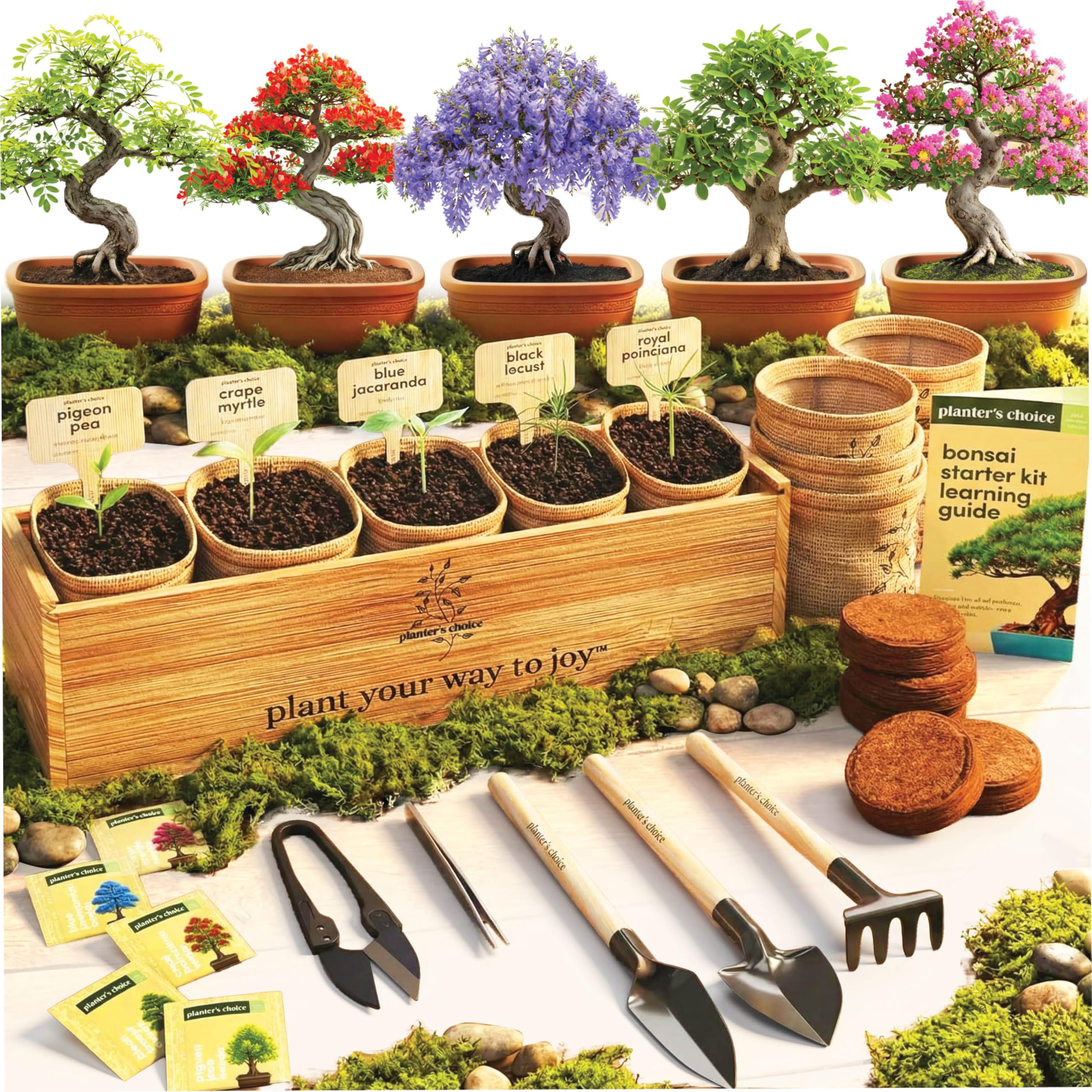
Planter’s Choice positions this kit as a deluxe starter set, and the packaging reflects that ambition. The wooden box, five waterproof burlap growing pots, bamboo plant markers, and a complete tool set stored in a burlap bag create a rustic aesthetic that makes the kit feel like a curated gift. The seeds are GMO-free, and the five varieties — Delonix Regia, Pigeon Pea, Crape Myrtle, Blue Jacaranda, and Black Locust — offer diversity in growth habit and eventual leaf structure.
Buyers consistently mention the kit’s visual appeal as a gift, with many purchasing it for plant-loving friends and family. The pre-fertilized expanding soil discs simplify the planting process: just add water, wait for the disc to expand, and plant. The instruction booklet goes beyond basic steps by including history and care traits for each species, which adds an educational layer that some competing kits lack.
One limitation is that the burlap pots are temporary — once the seedlings outgrow them, you will need to transfer to a permanent bonsai container with drainage holes. The kit does not include a proper bonsai pot, so factor that into your long-term plan. For a thoughtful, visually cohesive gift that introduces someone to the art of bonsai, this is the strongest option in the mid-range seed kit category.
Why it’s great
- Premium packaging with burlap and bamboo creates a memorable gift
- GMO-free seeds with detailed species instruction booklet
- Pre-fertilized soil discs simplify the planting step
Good to know
- Burlap pots are temporary — permanent bonsai pot needed later
- Germination results vary by species; Black Locust grows fastest
6. LUOJIBIE Bonsai Tree Kit for Beginners
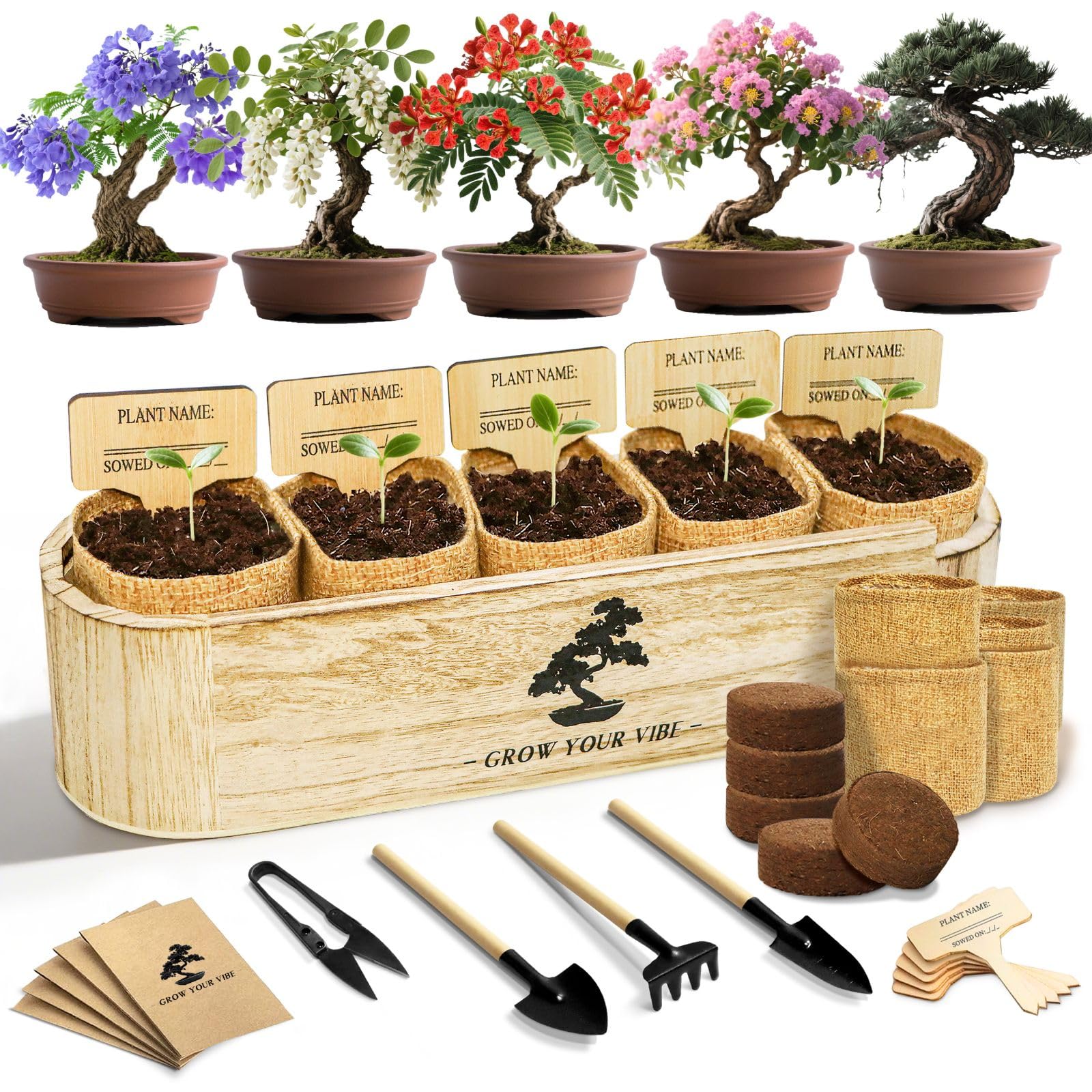
This kit from LUOJIBIE offers five seed varieties — Crape Myrtle, Delonix Regia, Black Pine, Locust Tree, and Blue Jacaranda — packed inside a wooden box that measures 12 inches long. The presentation is clean and straightforward, making it a practical gift option without the extra frills of burlap bags or bamboo markers. The pre-fertilized soil is included, and the instruction guide is designed for first-time growers.
Customer reviews split on germination success. Some buyers report that all five varieties sprouted, while others saw only one or two seeds grow after several months. The variation likely depends on environmental factors like temperature and humidity, which the instructions do not emphasize enough. The wooden box itself is nice but shallow, so the soil depth may limit early root development compared to deeper pots.
For the entry-level price point, this kit provides a low-cost introduction to the bonsai process. If you go in understanding that germination can be hit-or-miss and that you may need to supplement with a grow light or heating mat, the kit offers enough material for multiple attempts without a significant financial commitment.
Why it’s great
- Low cost makes it easy to try bonsai without a big investment
- 5 diverse seed varieties offer a range of growth experiences
- Wooden box packaging is gift-ready and functional
Good to know
- Germination rate is inconsistent across varieties
- Shallow wooden box limits root depth for early growth
7. LUOJIBIE Bonsai Tree Starter Kit (4 Varieties)
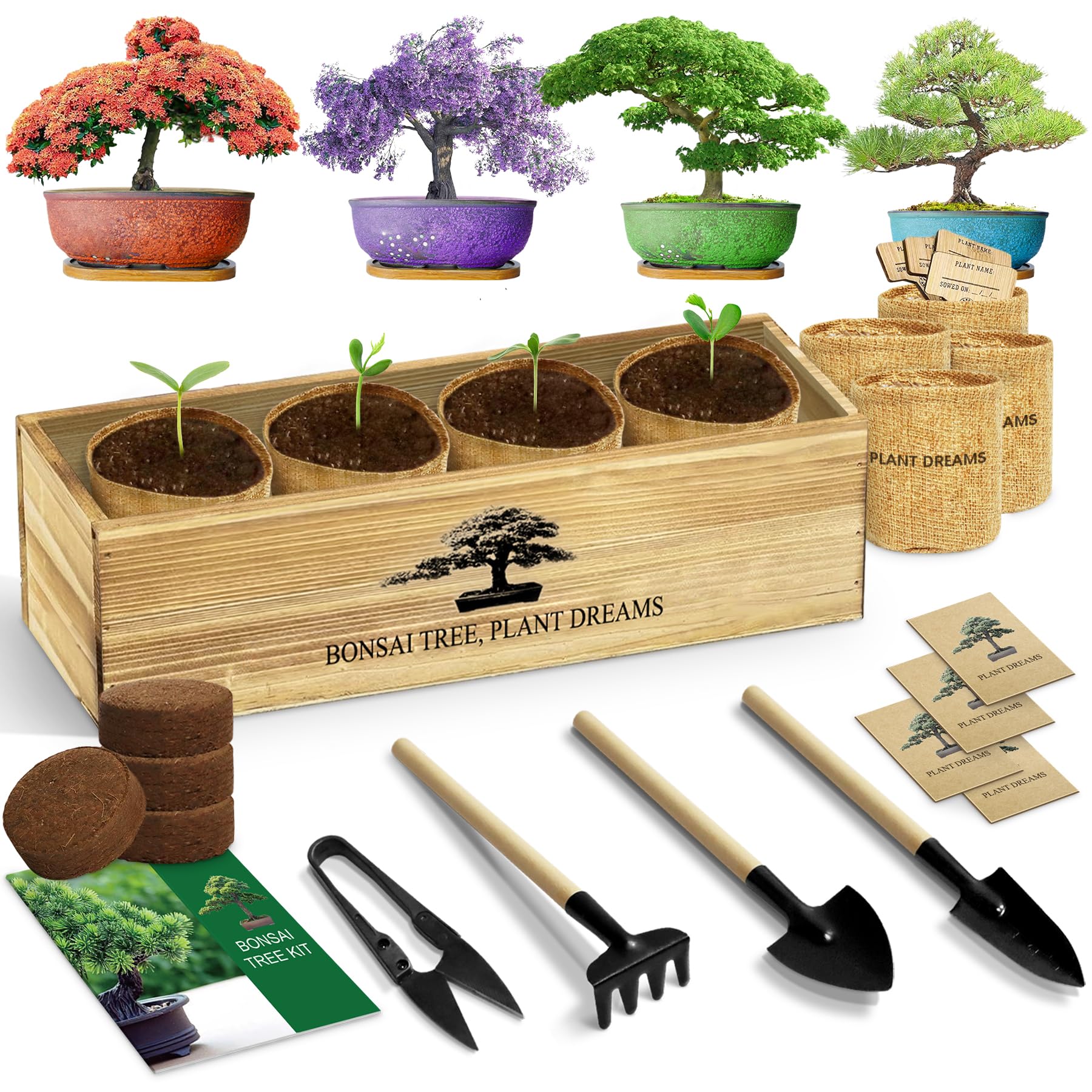
This variant from LUOJIBIE focuses on four species — Blue Jacaranda, Flame Tree, Japanese Black Pine, and Japanese Pagoda Tree — and includes a bonsai clipper in the kit. The Japanese Black Pine and Pagoda Tree are less common in beginner kits, offering a more traditional bonsai aesthetic for those who want to practice wiring and shaping as the saplings mature. The wooden box is larger than the 5-variety version, measuring 14.2 inches, which gives roots more room.
Customer reviews appreciate the completeness of the kit, noting that the clipper is sharp enough for light pruning and the coir bricks expand well. However, one experienced reviewer points out that successful germination of Japanese Black Pine requires a grow light, heating mat, and daily environmental monitoring — the paper instructions do not fully prepare beginners for this level of commitment. The kit is better suited for someone willing to invest in supplemental equipment.
For hobbyists who want to eventually shape a traditional pine bonsai rather than just grow any tree, this kit provides the right genetic material. The included clipper and larger box add practical value, but the learning curve is steeper than kits focused on fast-growing tropical varieties.
Why it’s great
- Japanese Black Pine and Pagoda Tree offer traditional bonsai styling potential
- Large wooden box provides better root space than compact kits
- Bonsai clipper included for early shaping practice
Good to know
- Japanese Black Pine needs supplemental heat and grow light for germination
- Paper instructions lack depth for high-maintenance species
FAQ
Can a Juniper bonsai survive indoors permanently?
How often should I water a Dwarf Jade bonsai?
Why are my bonsai seeds not germinating after two weeks?
Does a larger kit with more seed varieties guarantee success?
Final Thoughts: The Verdict
For most users, the indoor bonsai winner is the Brussel’s Bonsai Dwarf Jade because it combines instant visual maturity with near-indestructible care needs — a rare balance that rewards beginners and busy owners alike. If you want a tree that blooms and are willing to dial in daily watering, grab the Brussel’s Bonsai Chinese Sweet Plum. And for a gift that feels more like a landscape than a plant, nothing beats the Live Dwarf Juniper with Ceramic Fisherman.