
Our readers keep the lights on and the weekend projects moving. As an Amazon Associate, I earn from qualifying purchases.
If you struggle with excessive air gulping, gagging, or a frustratingly slow trickle from every bottle you try, you know the high-palate feeding challenge is real. The anatomy of a high palate creates a unique seal problem that standard nipples just can’t solve, leading to gas, reflux, and a feeding experience that’s exhausting for both caregiver and baby.
I’m Rikta — the co-founder and writer behind FitlyFast. I’ve spent hours analyzing the specific flow dynamics, nipple geometries, and venting systems that determine whether a bottle actually works for a high palate, scouring real user evidence and clinical specs to separate the functional from the decorative.
Whether you’re managing a cleft palate repair, tongue-tie recovery, or a naturally high-arched mouth, finding a device that delivers controlled flow without aspiration risk is critical. This guide breaks down the best-performing options to help you identify a true bottle for high palate that balances safety, comfort, and feeding efficiency.
How To Choose The Best Bottle For High Palate
The term “high palate” covers a broad spectrum — from a simple anatomical variation to conditions like cleft palate or Pierre Robin sequence. The right bottle is the one that compensates for the missing or inefficient seal between the nipple and the roof of the mouth. Here are the three critical factors to evaluate before buying.
Flow Control Mechanism
For a high palate, passive suck often fails because the baby cannot create the necessary vacuum. Look for a bottle with an active flow-control system — either a caregiver-squeezed reservoir (like the Medela Haberman) or a one-way valve that releases milk only when the baby compresses the nipple. Avoid free-flow designs that rely on tipping; they dump liquid before the baby is ready to swallow, increasing choking risk.
Nipple Material and Shape
A short, firm nipple will hit the high arch and cause gagging. The ideal nipple for a high palate is elongated, ultra-soft silicone that can conform to the roof of the mouth without triggering the gag reflex. Look for a wide, breast-shaped base that encourages a deeper latch and a flexible shaft that moves with the baby’s tongue — not against it.
Venting vs. Regulation
Standard anti-colic vents (base vents or internal straws) reduce air bubbles, but they don’t solve the high-palate flow problem. You need a system that actively meters flow — such as a nipple with a one-way valve that requires compression to open, plus a vent that equalizes pressure without flooding the nipple. The combination of active regulation and passive venting is what separates a specialty feeder from a general anti-colic bottle.
Quick Comparison
On smaller screens, swipe sideways to see the full table.
| Model | Category | Best For | Key Spec | Amazon |
|---|---|---|---|---|
| Medela SpecialNeeds Feeder | Specialty | Cleft Palate & Weak Suck | One-way valve flow control | Amazon |
| Thyseed PPSU Anti-Colic | Premium | Breastfed Transition | Base-vent + baby-led suction | Amazon |
| Thyseed Glass Anti-Colic (2-Pack) | Premium | Gas Reduction & Paced Feed | Borosilicate glass + base vent | Amazon |
| MAM 9oz Easy Start | Mid-Range | Anti-Colic & Latch Ease | Vented base + SkinSoft nipple | Amazon |
| PPSU Water Bottle (Postpartum) | Mid-Range | Lying-Down Hydration | Gravity-fed silicone straw | Amazon |
| LittleForBig Glass Adult Bottle | Entry-Level | Oversized Comfort Feeding | Borosilicate glass + X-slit nipple | Amazon |
| LIONICE Whale Fountain Tumbler | Entry-Level | Fun Hydration for Kids | Negative-pressure squirt mechanism | Amazon |
In‑Depth Reviews
1. Medela SpecialNeeds Feeder 150ml
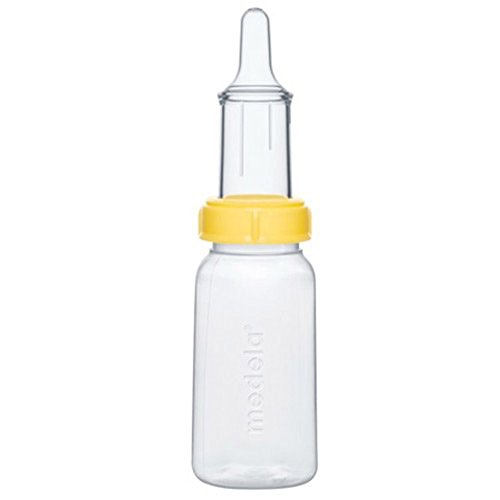
The Medela SpecialNeeds Feeder (Haberman design) is the gold-standard clinical solution for babies with cleft lip/palate, weak suck, or high-arched palates. Its defining innovation is a one-way valve system that releases milk only when the caregiver squeezes the silicone reservoir — the baby compresses the nipple against the palate to open the valve, giving the adult precise control over flow rate. Rotating the nipple adjusts flow from low to high, allowing you to match the baby’s strength without ever free-flowing liquid into the mouth.
Users report that babies with diagnosed Pierre Robin sequence or posterior tongue tie latch onto this feeder after rejecting every standard bottle on the market. The narrow, elongated nipple reaches past the high arch without hitting the gag trigger point, and the soft silicone collapses gently during suckling to strengthen oral motor coordination. The system is also remarkably leak-proof when tipped — a critical safety feature for babies who cannot tilt their head during feeds.
On the downside, the 5-ounce capacity is limiting for older or hungrier infants, and the feeder lacks a dust cap, so hygiene requires careful storage. There is a genuine learning curve — caregivers must watch the included instructional video to understand the squeeze-and-release rhythm. Cleaning is gentle-only (soak recommended) to avoid damaging the one-way slit valve. But for a high-palate baby with a weak or uncoordinated suck, this feeder is not optional; it is therapeutic.
Why it’s great
- One-way valve eliminates free-flow aspiration risk
- Adjustable flow by rotating nipple; suits weak to moderate suck
- Clinician-recommended for cleft lip/palate and Pierre Robin
- Fits standard Evenflo glass bottles for conversion
Good to know
- No dust cap included; requires careful storage
- 5 oz max capacity; older babies may need multiple feeds
- Hand-wash only; one-way valve can split with rough handling
2. Thyseed PPSU Anti-Colic Baby Bottle (8 oz)
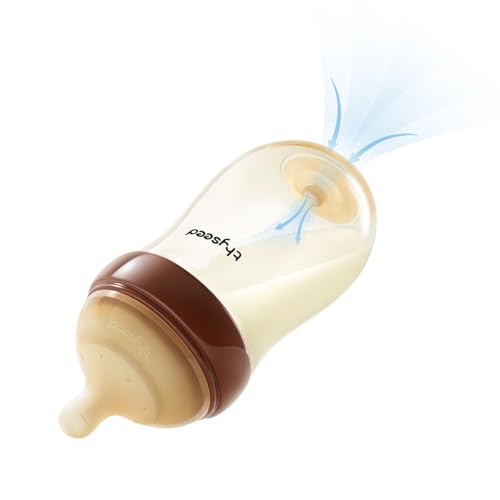
Thyseed’s PPSU Anti-Colic bottle uses a patented base-vent system that separates air from milk, reducing bubbles and swallowed gas. But its real strength for a high palate is the breast-like nipple: it is elongated, soft, and wide-based, encouraging a deep latch that seals around a high arch more successfully than shorter nipples. The baby-led flow design releases milk only when the infant actively sucks — no gravity drip — which minimizes choking risk during uncoordinated feeds.
Customer feedback repeatedly highlights that this bottle is the only one breastfed babies with bottle refusal will accept. The nipple’s flexibility mimics the stretch of human tissue, so babies with tongue-tie or high-palate anatomy can compress the base with their tongue and maintain suction without excessive jaw fatigue. The 4-piece design is trivially easy to clean and sterilize, and the PPSU body is lightweight and drop-resistant — a practical advantage for caregivers managing multiple daily feeds.
The trade-off is cost: this is a premium-priced bottle, and some users note that if the base is not screwed on when the milk is warm, slow leakage can occur at the neck seal. Also, the 3-month-old nipple may flow slightly fast for newborns, so you may need to pair it with a slower-stage nipple if your baby has an extremely weak suck. For a high-palate baby with moderate oral motor skills, however, the latch depth and anti-colic venting make this a top-tier daily driver.
Why it’s great
- Deep, soft nipple seals well on high-arched palates
- Base-vent reduces colic and gas significantly
- Only 4 parts; fast assembly and cleaning
- PPSU is lightweight, shatter-resistant, and sterilizer-safe
Good to know
- Premium price point; not an entry-level option
- May leak at neck if base is attached while bottle is warm
- Newborn flow may be too fast for some preemies
3. Thyseed Anti-Colic Glass Baby Bottle (2-Pack, 8 oz)
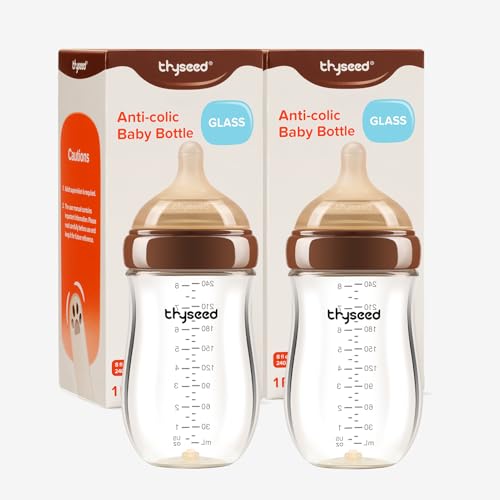
This 2-pack from Thyseed delivers the same base-vent anti-colic technology and breast-like nipple geometry as the PPSU version, but swaps the plastic body for premium borosilicate glass. The glass body provides a perfectly inert taste — no plastic flavor leaching — and retains temperature more evenly during warming, which can be helpful for babies with high-palate sensitivity who refuse cold spots in their milk.
Compared to the PPSU single, this glass 2-pack offers better value if you need multiple bottles in rotation, and the dual stage nipples (medium-fast flow) work well for babies who have started transitioning from exclusive breast or special-needs feeders. The base-vent system is clinically studied (published in JAMA) and significantly reduces swallowed air, which is often severe in high-palate babies who cannot achieve a continuous seal during suckling. Users also praise the lack of neck air valves, meaning fewer potential leak points and faster assembly.
However, recent reviews raise a serious concern: the external paint markings used for ounce indicators have been independently tested and found to contain lead. While lead in paint is still technically allowed for non-food-contact surfaces, any lead exposure during the sensitive infant period is unacceptable for many families. If you choose this bottle, you must never let the baby mouth the exterior markings. The manufacturer’s response on this issue has been minimal, so factor this risk into your decision. For the glass version’s thermal neutrality and 2-pack value, the lead-in-paint issue makes it a cautious selection.
Why it’s great
- Clinical base-vent reduces gassiness and reflux
- Borosilicate glass: neutral taste, easy to heat, dishwasher safe
- Deep latch nipple works for high-palate babies
Good to know
- External paint markings contain lead — keep out of baby’s mouth
- Some early nipple failures reported after washing
- Medium-fast flow may be too fast for newborns
4. MAM 9oz Easy Start Anti-Colic+ Wide Neck Bottle
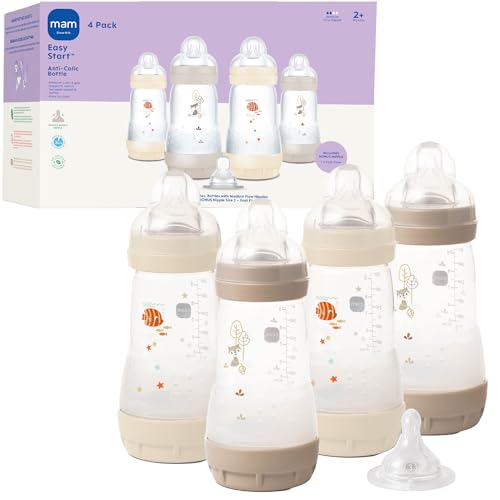
MAM’s Easy Start Anti-Colic+ bottle is a popular mid-range option that works well for high-palate babies with moderate symptomatology — those who don’t need a full clinical feeder but struggle with latch and gas. The key innovation is the dual anti-colic system: a vented base prevents air from bubbling up through the milk, while the SkinSoft nipple mimics the mother’s nipple texture to encourage a natural latch. The nipple is pre-compressed and elongated, reaching past a high arch better than a standard short nipple.
The self-sterilizing feature sets MAM apart: the bottle can be microwaved to sterilize in 3 minutes and stays clean for up to 48 hours if left untouched. This is a huge practical benefit for parents running multiple high-palate feeds per day, where sterilization hygiene matters more than usual. The parts are all dishwasher-safe and made from bio-circular, BPA/BPS-free materials; the bottle grows with the baby since it accepts all MAM nipple sizes and flows.
That said, the MAM system is a passive anti-colic design — it reduces air ingestion but doesn’t actively meter flow like the Medela Haberman. If your baby has a severely weak or uncoordinated suck, the MAM’s medium-flow nipple may still deliver milk faster than the baby can swallow. It also has more parts than the Thyseed (base, nipple, collar, cap, and optional vent disc), which some caregivers find tedious to reassemble during middle-of-the-night feeds. For high-palate babies with a fair suck who need gas relief, this bottle delivers excellent value.
Why it’s great
- Self-sterilizes in 3 minutes; stays clean 48 hours
- Elongated SkinSoft nipple encourages deeper latch
- Reduces colic symptoms in 80% of babies (clinically tested)
- Accepts all MAM nipple flows; bottle grows with baby
Good to know
- More parts to disassemble and reassemble than competitors
- Medium-flow nipple may be too fast for severe weak suck
- Not a flow-regulating feeder; relies on passive venting
5. PPSU Water Bottle for Postpartum & Bedridden Care (17 oz)
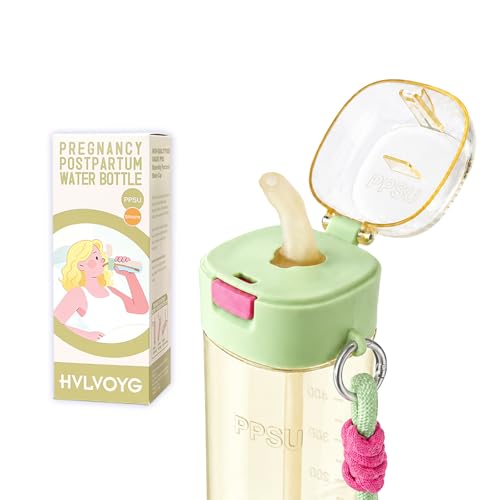
This PPSU water bottle targets a different high-palate user: the caregiver who needs hands-free hydration while bedridden or recovering postpartum. Its gravity-fed silicone straw controls flow rate — the user doesn’t need to tip the bottle, reducing the risk of liquid flooding the mouth — and the anti-choking flow limiter prevents fast gulping. This makes it a functional tool for adults with high palate anatomy who experience choking when drinking from standard bottles or cups.
The 3-part design is simple to disassemble and clean, and the PPSU material is heat-resistant up to 356°F, so it withstands boiling sterilization and dishwasher cycles without degrading. The 17-ounce capacity is practical for bedside use without being too heavy to hold while reclining. Customers note that the wide silicone straw is notably firm and requires less suction effort than typical narrow straws, which is a plus for anyone with reduced oral motor strength.
The limitation is that this is strictly a straw-sip system — it cannot be used by tipping the bottle, and the one-direction flow makes it unsuitable for babies or young children who cannot independently suck from a straw. It also lacks the clinical flow modulation of a squeeze feeder; if the user has an extremely weak suck, the anti-choking valve may be too restrictive. For the adult high-palate user who needs safe reclining hydration, this bottle is a budget-friendly and well-designed solution.
Why it’s great
- Gravity-fed straw eliminates tipping and overpour
- Anti-choking flow limiter prevents flooding
- Heat-resistant PPSU stands up to boiling and dishwasher
- Only 3 parts for easy cleaning
Good to know
- Straw-only design; cannot be used tilted
- Flow limiter may be too restrictive for very weak suck
- Not suitable for infant feeding; adult use only
6. LittleForBig Adult Glass Feeding Bottle (15.4 oz)
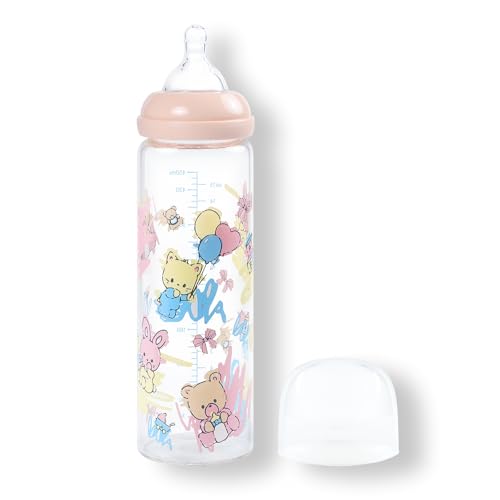
The LittleForBig Adult Glass Feeding Bottle is an oversized (15.4 oz) borosilicate glass bottle designed for adult comfort feeding, featuring an X-slit fast-flow vented silicone nipple. The wide mouth makes filling and cleaning easy, and the all-glass body avoids the plastic taste that some high-palate adults find nauseating. For adults who use a bottle for sensory regulation or feeding support — including those with high palate anatomy causing choking on standard nipples — the larger diameter and fast flow reduce feeding time and fatigue.
Users appreciate that the bottle is compatible with LittleForBig’s own nipple line, and the printed Baby Cuties designs (bunnies, kittens) are printed on the exterior, so they don’t contact the liquid. The borosilicate glass is durable and heat-stable, though the printed graphics are best preserved with hand washing rather than dishwasher cycles. The 5-star reviews consistently highlight the comfortable ergonomic shape and the X-slit nipple’s smooth, uninterrupted flow.
This bottle is not a clinical or special-needs device, so it lacks any active flow-regulating mechanism. The fast-flow nipple dumps milk when the bottle is tipped, so users who cannot control their head or suckle rhythm will risk aspiration. Additionally, the nipple is designed for adult oral anatomy, not infant. For the adult high-palate user who wants a larger, glass, fast-flow comfort bottle, this is a solid entry-level option — but only if the user has sufficient oral control to manage the flow.
Why it’s great
- Large 15.4 oz capacity for adult comfort feeding
- Borosilicate glass: inert taste, heat stable
- Wide mouth for easy cleaning and filling
- Fast-flow X-slit nipple reduces feeding effort
Good to know
- No flow regulation; free-flow design requires user control
- Prints are dishwasher-sensitive; hand wash recommended
- Not suitable for infants or users with weak suck/swallow
7. LIONICE Whale Fountain Tumbler (24 oz)
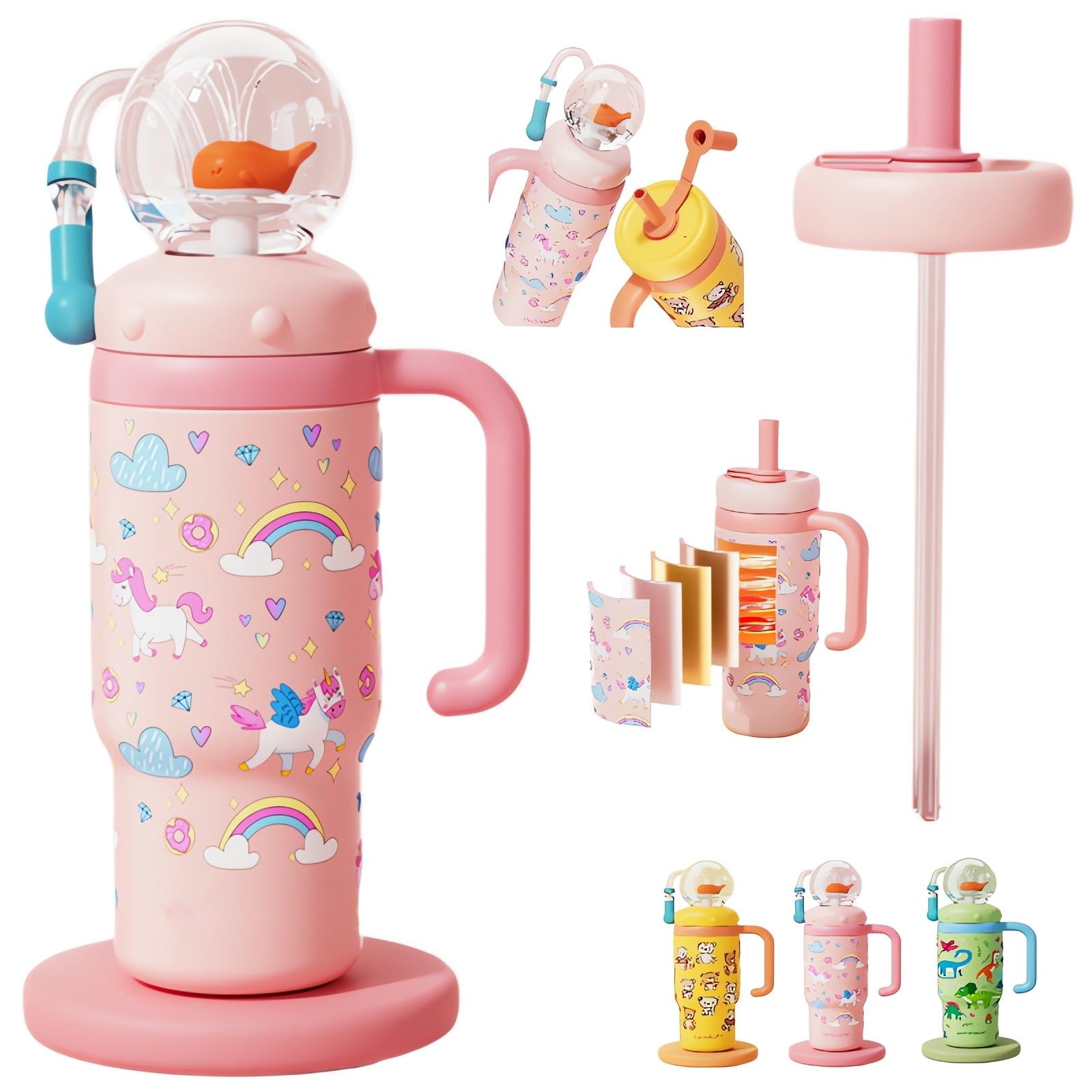
The LIONICE Whale Fountain Tumbler uses a negative-pressure squirt mechanism: the user sucks on the whale spout to draw liquid up through the straw, creating a playful fountain effect. For children or adults with high palates who find standard sippy cups frustrating, this novelty design can make hydration fun and engaging. The double-wall vacuum insulation keeps drinks cold for 24 hours or hot for 12 hours, which is useful for school or outdoor use.
The tumbler comes with two straws and a straw brush, and the weighted straw end follows the liquid to the bottom, so the user doesn’t have to tilt the cup — a feature that benefits children with oral motor delays who struggle with tipping. The soft silicone spout is gentle on teeth and gums, and the spill-proof lid prevents messes when closed. Parents report that the whale squirt design significantly increased their child’s water intake.
The catch: the squirt mechanism requires a strong, continuous suck to maintain the fountain. If the user stops sucking, the water falls back into the cup. For a child with a weak suck or a high palate that prevents a tight lip seal, this tumbler will be frustrating to use and may cause more coughing from interrupted flow. Several buyers noted the cuteness is 11 out of 10 but the functionality is 4 out of 10. It’s best for children who already have strong oral motor skills and just need a hydration boost.
Why it’s great
- Novelty squirt mechanism encourages kids to drink more
- Insulated: cold for 24 hours, hot for 12 hours
- Weighted straw follows liquid; no tipping needed
- Spill-proof when lid is closed
Good to know
- Requires strong, continuous suction; not for weak suck
- Difficult to clean thoroughly; straw interior can mold
- Carbonated beverages cause pressure build-up in lid
FAQ
Can a standard anti-colic bottle work for a high palate?
How do I know if my baby needs a special-needs feeder vs. a standard bottle?
Final Thoughts: The Verdict
For most users, the bottle for high palate winner is the Medela SpecialNeeds Feeder because its one-way valve system eliminates aspiration risk and lets the caregiver match flow to the baby’s precise suck strength. If you want a deep-latch, anti-colic solution for a baby with moderate oral motor skills, grab the Thyseed PPSU Anti-Colic. And for the adult user needing safe reclining hydration, nothing beats the PPSU Postpartum Water Bottle.