
Our readers keep the lights on and the weekend projects moving. As an Amazon Associate, I earn from qualifying purchases.
Toenail fungus is stubborn, persistent, and often resistant to the thick creams that fail to penetrate the nail plate. Finding a treatment that actually reaches the infection site and restores nail clarity is the real challenge. That’s why we’ve separated the effective solutions from the topical disappointments.
I’m Rikta — the co-founder and writer behind FitlyFast. I’ve spent countless hours analyzing the chemical compositions, penetration methods, and customer results of dozens of antifungal nail treatments to build this comparison.
Consistency with a high-potency formula designed to penetrate the nail bed is the only way to beat this infection, which is why I’ve curated this list of the best antifungal treatment for toenails on the market right now.
How To Choose The Best Antifungal Treatment For Toenails
Selecting a topical antifungal for toenails isn’t about picking the most popular brand. You need to match the active ingredient and delivery system to the severity of your infection. Here are the critical factors to consider before buying.
Active Ingredients: Undecylenic Acid vs. Tolnaftate vs. Tea Tree Oil
The active ingredient is your primary weapon. Undecylenic acid, often at 25% concentration, is a potent fatty acid that disrupts fungal cell membranes. Tolnaftate 1% is a synthetic antifungal proven in clinical settings. Tea tree oil offers a milder, natural antifungal option suitable for maintenance and milder cases. Avoid creams; they rarely penetrate the nail plate.
Penetration and Delivery System
A treatment is only as good as its ability to reach the fungus under the nail. Liquid solutions with a brush applicator are superior to creams. They wick under the nail plate and into the nail bed. Look for formulations that explicitly mention deep penetration or subungual delivery. Consistency in applying the liquid to the nail edge and underside is critical.
Application Frequency and Treatment Duration
Most effective treatments require twice-daily application for several months. The nail grows slowly, and you must treat until the healthy nail has fully grown out. A formula that dries clear and odorless is easier to stick with daily. Products that require once-daily application may be less effective for severe cases.
Quick Comparison
On smaller screens, swipe sideways to see the full table.
| Model | Category | Best For | Key Spec | Amazon |
|---|---|---|---|---|
| VTROUY Undecylenic Acid 25% | Liquid Solution | Fast visible improvement | 25% Undecylenic Acid + Tea Tree | Amazon |
| FungaBlend 10 | Gel Solution | Podiatrist-developed formula | 1% Tolnaftate + 10 Plant Medicines | Amazon |
| Forces of Nature | Organic Oil | USDA Organic preference | USDA Organic, Homeopathic | Amazon |
| OSIMOON Undecylenic Acid | Liquid Solution | Value for two bottles | High-potency Undecylenic Acid | Amazon |
| Thursday Plantation Tea Tree | Essential Oil | Natural, gentle treatment | 100% Tea Tree Oil | Amazon |
| Clarus Antifungal 1% | Medicated Liquid | Post-laser or maintenance | 1% Antifungal Solution | Amazon |
| V20 Vite 20 Cream | Antifungal Cream | Budget-friendly try | Antifungal Cream Formula | Amazon |
In‑Depth Reviews
1. VTROUY Toenail Fungus Treatment Extra Strength
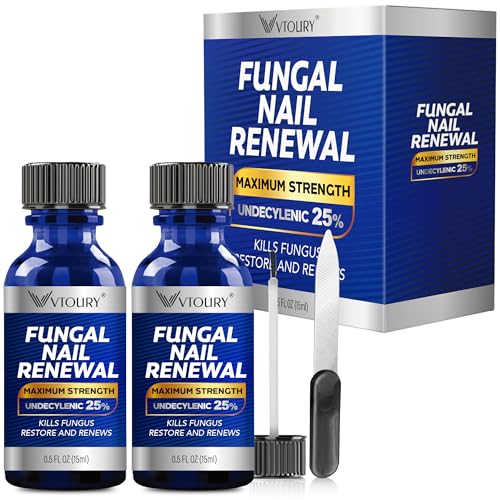
The VTROUY treatment stands out for its aggressive 25% undecylenic acid concentration paired with tea tree oil, a combination that attacks fungus from two angles. This liquid formula is designed to wick under the nail plate, reaching the nail bed where most infections reside. The precision brush applicator makes targeting the affected area simple and reduces waste.
Customer reports highlight rapid results, with some seeing significant improvement in nail color and debris reduction within a single week. The twice-daily application is standard for this potency level, and the solution dries relatively clear without staining socks. For users with thick, discolored nails that have resisted other treatments, this formula has shown remarkable turnaround times.
The two-bottle pack provides a full treatment course, which is essential because stopping early allows the fungus to rebound. Some users noted the small bottle size, but the concentrated formula requires only a drop per nail. This is a serious treatment for stubborn fungal infections that have progressed beyond the mild stage.
Why it’s great
- High 25% undecylenic acid concentration for stubborn infections.
- Liquid formulation penetrates under the nail effectively.
- Two-bottle set provides a complete treatment course.
Good to know
- Requires consistent twice-daily application for best results.
- Results vary based on severity and duration of infection.
2. FungaBlend 10
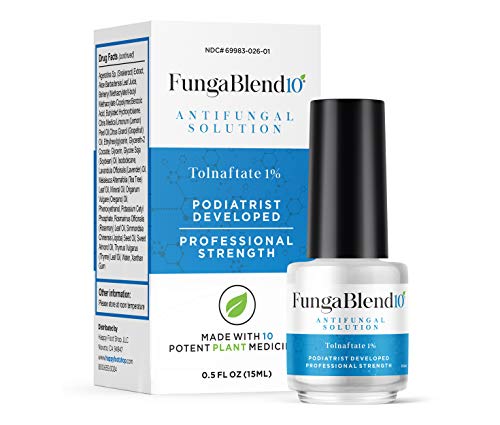
Developed by a podiatrist, FungaBlend 10 combines a clinically proven 1% tolnaftate base with a proprietary blend of 10 therapeutic plant medicines. This dual-action approach offers both the scientific rigor of a proven antifungal and the supportive properties of botanicals like tea tree and oregano oil. The gel-like consistency dries clear and odorless, making it a discreet daily application.
Users with long-standing, treatment-resistant infections have reported success where oral prescriptions and laser therapies failed. The formula is designed to break down the biofilm that protects the fungus, allowing the tolnaftate to reach deeper layers. Consistent twice-daily application is key, and several reviewers noted visible new clear nail growth within weeks.
The packaging includes a brush applicator, though some users found the brush design could be improved for reaching the nail-skin gap. The bottle size is standard for this category, and the manufacturer recommends using it alongside their urea 42% gel for severe cases. For a professional-strength solution backed by a money-back guarantee, this is a top contender.
Why it’s great
- Podiatrist-developed with 1% tolnaftate, a proven antifungal agent.
- Includes 10 plant medicines to combat biofilm and support healing.
- Dries clear and odorless for discreet daily use.
Good to know
- Brush design can struggle to reach the bottom of the bottle.
- Requires consistent application; skipping doses may allow resurgence.
3. Forces of Nature Nail Fungus Control Extra Strength
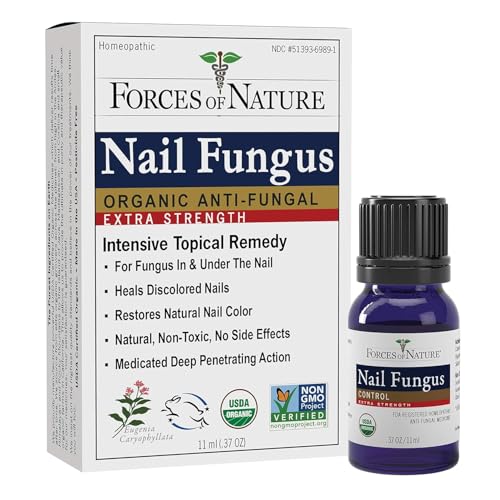
For those prioritizing clean ingredients, Forces of Nature delivers a USDA Certified Organic formula that blends homeopathic ingredients like Calendula and Silica with antifungal essential oils. This extra-strength version is designed to address dry, brittle, and discolored nails without synthetic chemicals. The oil-based solution requires shaking before each application and absorbs into the nail and surrounding skin.
Users with moderately severe cases saw improved nail appearance within two weeks, though the manufacturer notes that severe infections may require longer treatment periods. The organic formulation is gentle on sensitive skin, but the oil texture can be a bit messy compared to quick-dry liquid solutions. A dropper applicator would improve precision, as some users found the bottle design wasteful.
It is made in an FDA-registered facility and carries Non-GMO and Leaping Bunny certifications, which adds trust for the ethically-minded buyer. This is not the fastest-acting option, but for those who want a natural approach that supports overall nail health while fighting fungus, it is a solid pick. Pair it with diligent foot hygiene for best results.
Why it’s great
- USDA Organic and Non-GMO certified for clean ingredient profiles.
- Contains Calendula and Silica to support nail strength and health.
- Made in a registered FDA facility with ethical certifications.
Good to know
- Oil-based texture can feel messy and lacks precise dropper.
- May take longer to show results on severe, thick infections.
4. OSIMOON Maximum Strength Undecylenic Acid
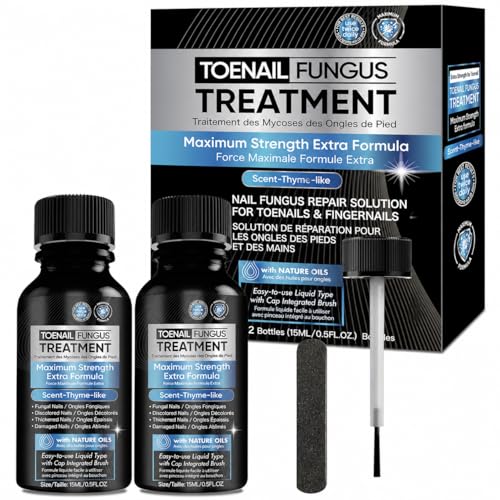
The OSIMOON treatment offers a high-potency undecylenic acid solution packaged in a two-bottle set, making it one of the most cost-effective options for long-term treatment. The liquid formula is designed to wick beneath the nail plate, targeting the fungus where creams cannot reach. The brush applicator allows for simple, direct application to the affected area.
Users report that the solution has a mild, thyme-like scent and dries quickly without staining nails or socks. Several reviewers with recurring or chronic infections noted that consistent use led to clear nail regrowth and no recurrence. The manufacturer recommends applying two to three times daily for best results, which is consistent with high-potency undecylenic acid protocols.
While the active ingredient is potent, the success of this treatment still depends heavily on user consistency. The two-bottle supply is generous enough to cover the several-month treatment cycle without a refill. For those looking for a budget-friendly entry point into serious nail fungus treatment, this is a well-priced starter kit.
Why it’s great
- Two-bottle pack offers excellent value for a full treatment course.
- Liquid wicks under the nail plate for deep penetration.
- Low odor and does not stain nails or socks.
Good to know
- Requires diligent 2-3 times daily application for months.
- Success depends on consistent use and nail hygiene.
5. Thursday Plantation Tea Tree Antifungal Solution

Thursday Plantation offers a straight 100% tea tree oil solution packaged with a handy brush applicator for mess-free use. Tea tree oil is a well-documented natural antifungal and antiseptic, making this a gentler alternative to synthetic chemicals. It is particularly good for mild infections, early-stage discoloration, or as a maintenance treatment after stronger therapy.
Users with mild to moderate cases reported seeing visible improvement in as little as a month, with new nail growth coming in clear. The key theme in positive reviews is consistency: applying the solution to the nail, cuticle, and surrounding skin daily. The tea tree smell is strong but pleasant to most, and it dries to a slightly oily finish.
This is not the right choice for severe, thick, or deeply embedded infections where a higher-potency synthetic is needed. It also works best when paired with regular nail filing and trimming to remove fungal debris. For those who prefer a natural-first approach and are disciplined with daily care, this is a reliable and gentle option.
Why it’s great
- 100% pure tea tree oil, a natural antifungal with proven efficacy.
- Convenient brush applicator for clean, targeted use.
- Effective for mild infections and maintenance therapy.
Good to know
- Less potent than synthetic agents for severe, stubborn fungus.
- Requires diligent nail care and daily application.
6. Clarus Antifungal 1% Solution
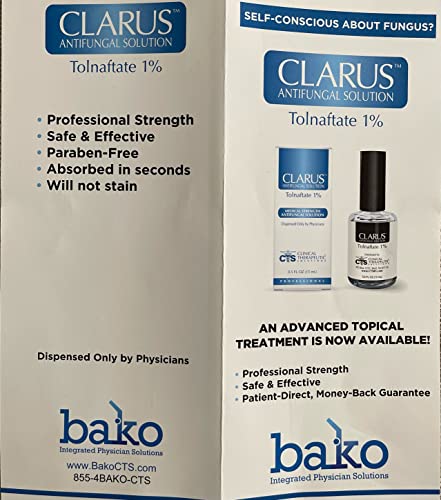
Clarus is a podiatrist-recommended 1% antifungal solution often used as a follow-up to laser treatments or oral medication. It is formulated to be applied like a nail polish, drying clear and forming a protective barrier. Many users purchase this directly after a podiatrist visit to continue care at home, often saving money compared to clinic prices.
The strongest user experiences involve using Clarus as a long-term preventive measure. One reviewer has used it daily for four years with no recurrence of fungus. Another found that catching a new infection early and applying Clarus was enough to clear it without needing laser again. It works best as part of a regimen that includes daily filing, trimming, and sanitizing tools.
It is not a miracle cure for advanced, longstanding infections when used alone. For those cases, users reported better results when combining it with a keratolytic gel like Kera Nail to break down thickened nail debris. This is a maintenance and early-intervention champion rather than a heavy-duty sterilizer.
Why it’s great
- Podiatrist-recommended for post-laser and maintenance care.
- Dries clear and forms a protective layer on the nail.
- Effective for preventing recurrence with daily use.
Good to know
- May not be strong enough alone for severe, thick infections.
- Best used in conjunction with regular nail filing and hygiene.
7. V20 Vite 20 Antifungal Cream
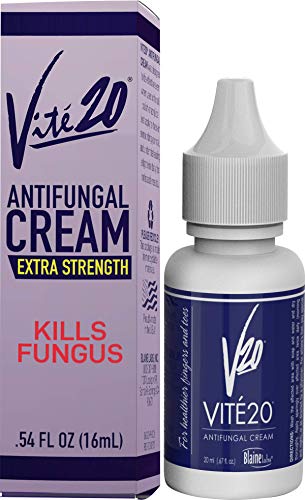
The V20 Vite 20 is a classic antifungal cream that some users swear by, particularly when paired with diligent nail clipping and cleaning. It comes in a small tube and is often recommended by nail salons. While a cream format is generally less effective at penetrating the nail plate compared to liquids, some users with mild infections have reported success.
The most enthusiastic reviews come from those who used it alongside a strict foot-care routine: clipping the nail back, cleaning under the edge, and applying the cream daily. One reviewer noted it worked where expensive podiatrist treatments had failed. However, the cream format means it is best suited for infections that haven’t deeply penetrated the nail bed.
It is the most budget-friendly option here, but its efficacy is limited by the cream delivery system. For severe cases or thick, yellowed nails, a liquid solution with undecylenic acid or tolnaftate will likely outperform this cream. Consider it a low-cost trial for very mild surface-level discoloration.
Why it’s great
- Very low cost, making it an accessible first attempt.
- Recommended by salon professionals for mild cases.
- Can be effective when combined with rigorous nail hygiene.
Good to know
- Cream format struggles to penetrate the nail plate.
- Results are inconsistent for moderate to severe infections.
FAQ
How long does it take for a topical antifungal to cure toenail fungus?
Can I use a cream instead of a liquid solution for nail fungus?
Is undecylenic acid or tolnaftate better for toenail fungus?
Final Thoughts: The Verdict
For most users, the antifungal treatment for toenails winner is the VTROUY Toenail Fungus Treatment because its 25% undecylenic acid concentration delivers fast penetration and visible improvement even on stubborn infections. If you want a podiatrist-developed formula with plant medicine support, grab the FungaBlend 10. And for a natural, USDA Organic option that supports overall nail health, nothing beats the Forces of Nature.